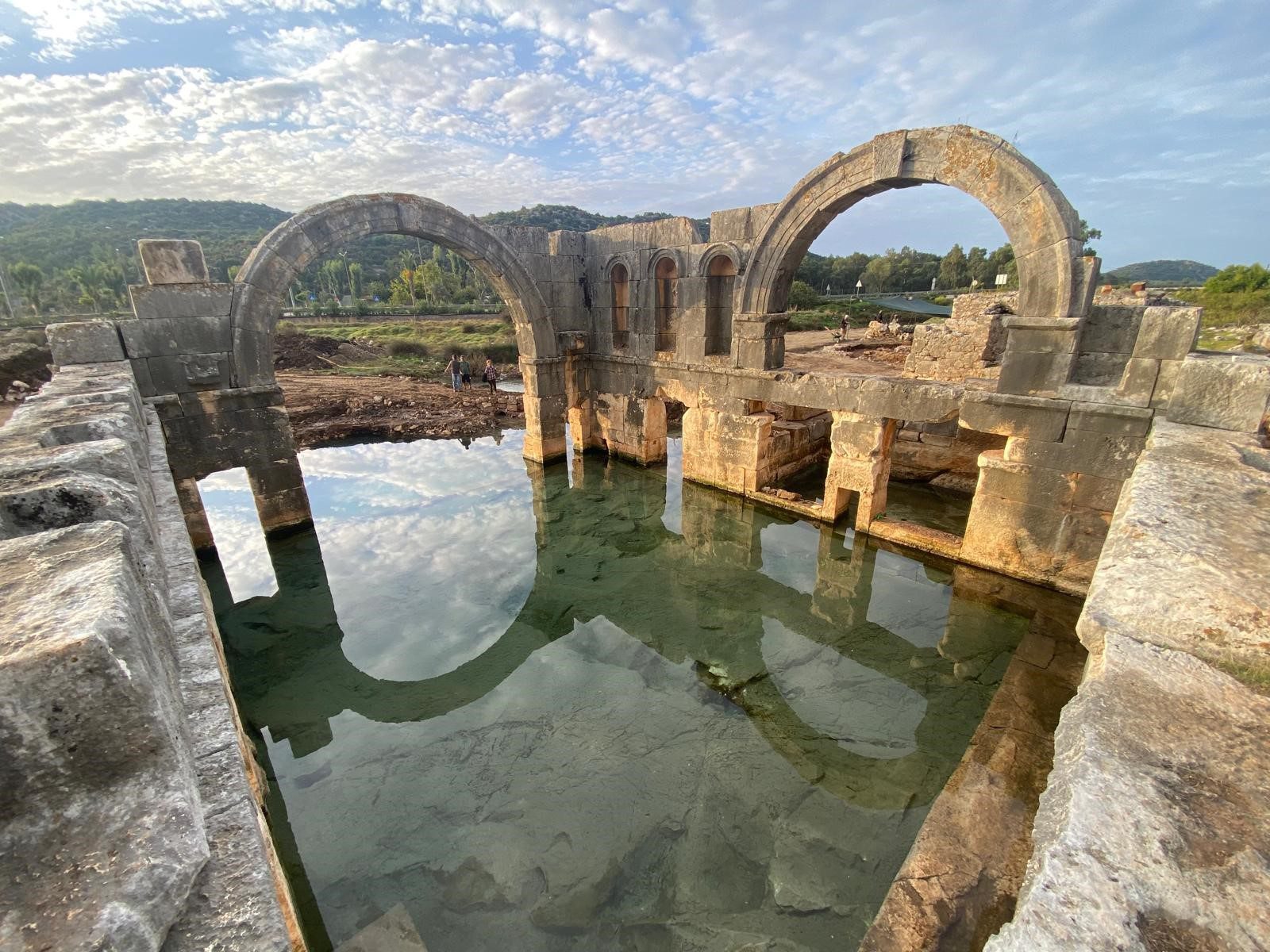
At Myra Ancient City, archaeologists have uncovered an 1,800-year-old Roman bath whose design does not correspond to any known bath or water monument in the region. The discovery introduces a previously undocumented type of Roman thermal architecture, reshaping long-held assumptions about imperial-era building practices in Lycia.
A Site Long Known, but Long Untouched
The structure lies within the protected boundaries of Myra, near modern Demre. Although referenced in archaeological literature since the mid-20th century, excavation was repeatedly postponed due to dense industrial development surrounding the site.
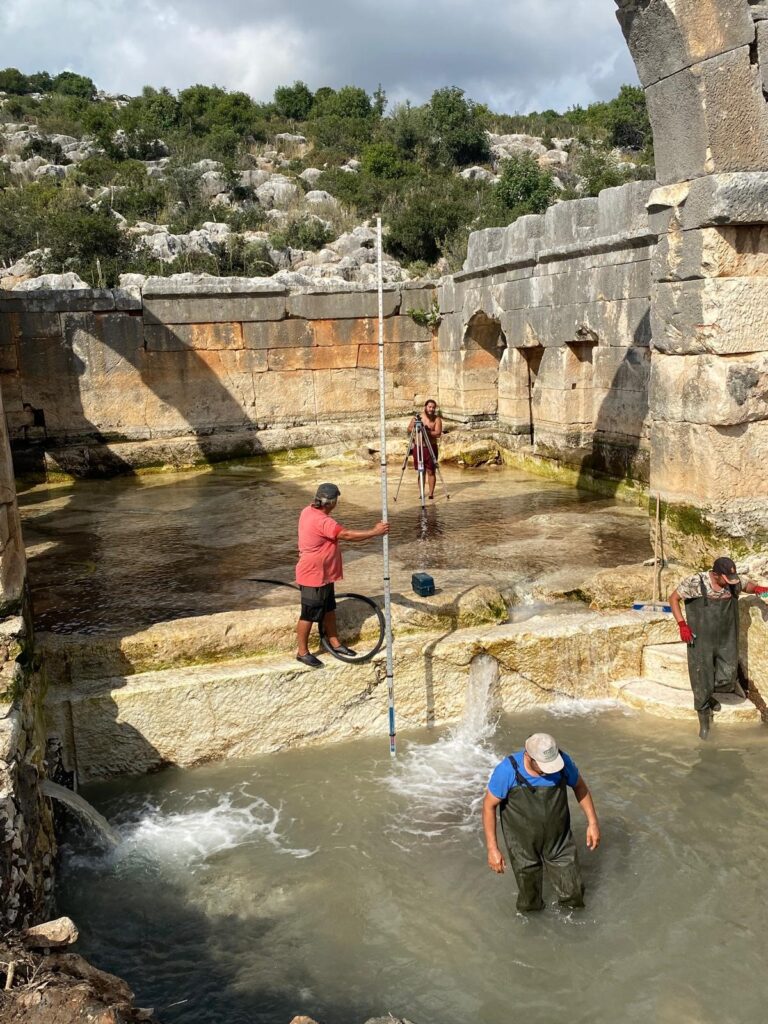
Only after the complete removal of this modern infrastructure could archaeologists begin systematic fieldwork. The excavation is directed by Nevzat Çevik and carried out under Türkiye’s national cultural heritage framework.
Why This Is Not a Typical Roman Bath
For decades, the building was classified as a nymphaeum, following early interpretations that were never tested through full excavation. That classification dissolved once the entire architectural plan became visible.
The structure lacks the standardized sequence of rooms expected in Roman bath complexes and does not function as a decorative water monument. Instead, it was designed as a directly spring-fed bath, built around the continuous flow of thermal water and organized according to a highly localized and original plan.
So far, no architectural parallel has been identified in Lycia or adjacent regions, making the building unique within the known corpus of Roman baths.
Pools, Marble, and Flowing Thermal Water
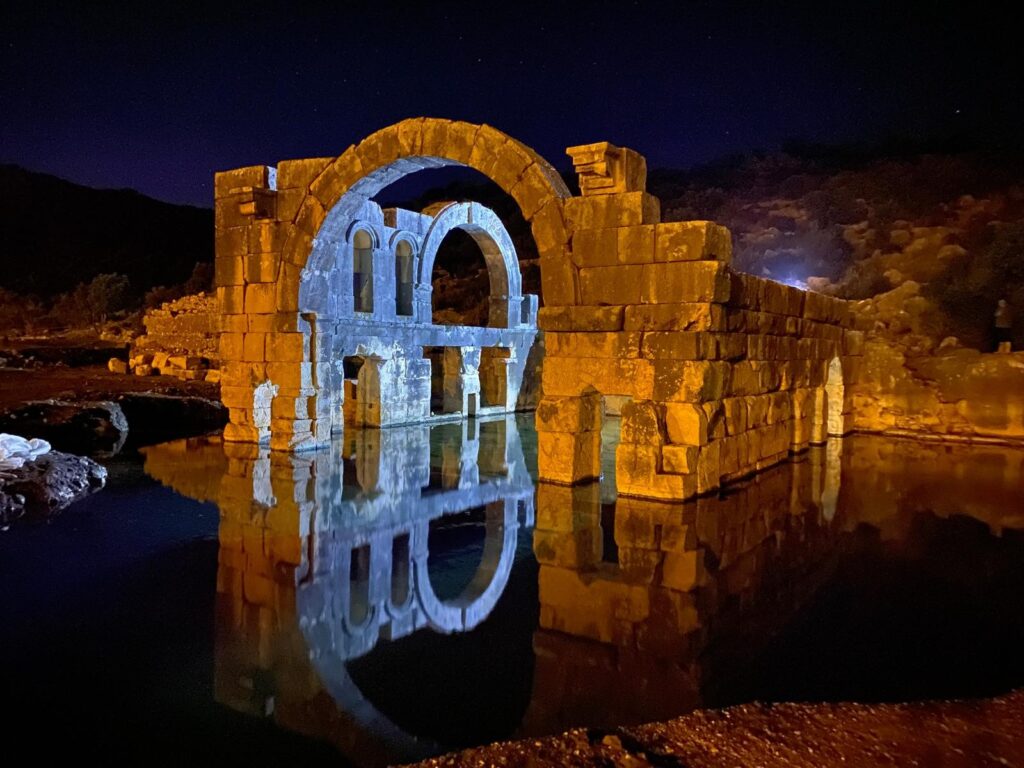
Excavations have revealed two pools of different scales, both originally lined with marble. Sections of this marble covering remain preserved, providing rare insight into the structure’s original appearance and construction quality.
Because thermal water continues to circulate through the building, excavation presents unusual challenges. Water depth varies across levels, requiring careful control and long-term planning. Conservation experts are currently developing sustainable methods to manage water flow while preserving the structure’s integrity.
A New Chapter in Myra’s Roman History
Myra is best known for its Lycian rock-cut tombs and monumental Roman theater. The discovery of an architecturally unprecedented Roman bath adds a new dimension to the city’s imperial-period landscape, suggesting forms of bathing, healing, or communal activity that were previously undocumented.
As research continues, the site is expected to contribute significantly to broader discussions on regional diversity within Roman imperial architecture, highlighting how local conditions could generate original solutions beyond standard metropolitan models.