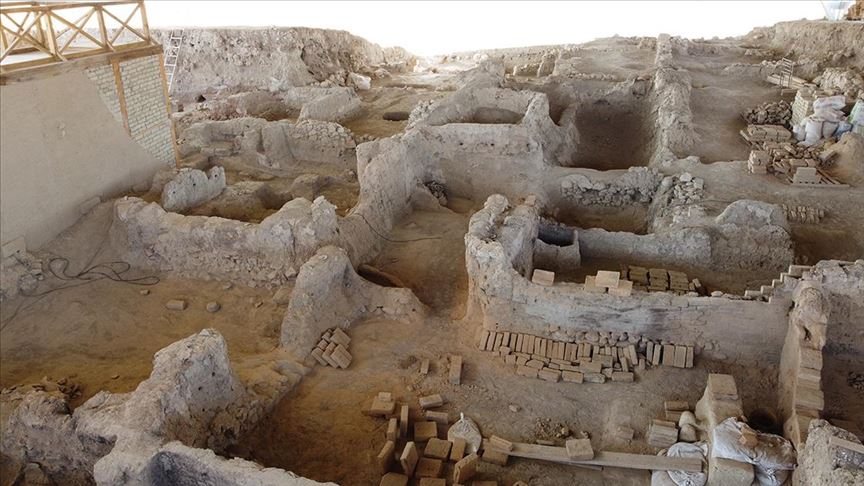
A 3,900-year-old blue textile fragment uncovered in western Türkiye has been identified as the earliest known indigo-dyed fabric in Bronze Age Anatolia.
The discovery, made at Beycesultan Höyük, also includes the region’s first confirmed evidence of single-needle knitting—revealing a level of textile sophistication previously undocumented in Anatolia during the second millennium BC.
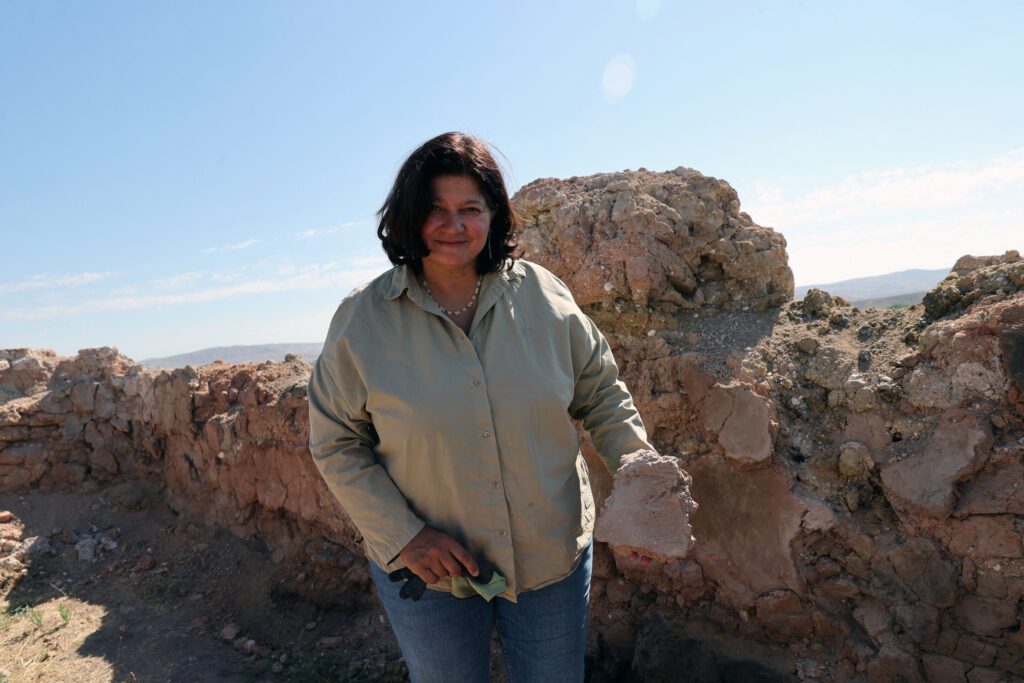
The research, led by Assoc. Prof. Dr. Çiğdem Maner of Koç University and published in Antiquity, pushes back the timeline for advanced dyeing and fiber technology in the region by several centuries.
A Rare Survivor from the Middle Bronze Age
The earliest fragment dates to approximately 1915–1745 BC, within the Middle Bronze Age. It was found adhered to the floor of a burnt architectural space excavated between 2016 and 2018.
Textiles rarely survive in Anatolian soil. Organic fibers typically decompose due to humidity and microbial activity. In this case, fire altered the material in a way that preserved it. Carbonization sealed microscopic structural details that would otherwise have disappeared.
Laboratory analysis determined that the fibers were made from hemp and dyed with indigo derived from woad (Isatis tinctoria). Producing indigo dye requires controlled processing and chemical transformation; it does not occur accidentally. The presence of a deliberately dyed textile indicates technical knowledge in plant processing and color extraction that was already established nearly four millennia ago.
The Earliest Evidence of Single-Needle Knitting in Anatolia
Equally significant is the method of production.
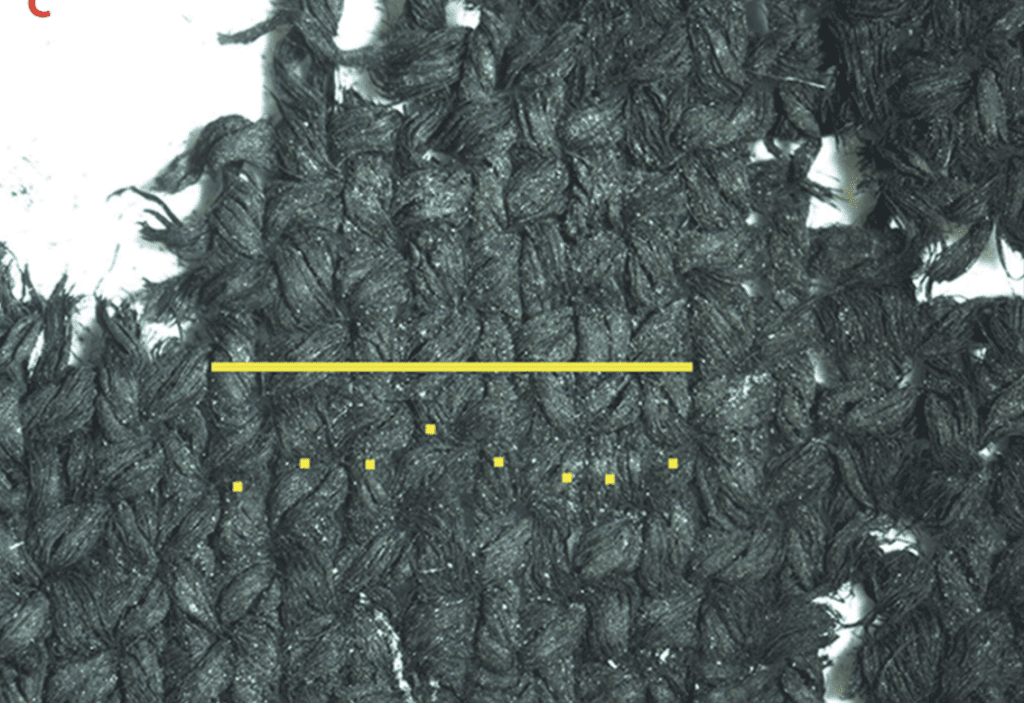
Rather than being woven on a loom, the textile was constructed using nålbinding, a single-needle looping technique that predates later knitting traditions. Unlike true knitting, nålbinding involves passing short lengths of yarn repeatedly through existing loops, creating a dense and durable structure.
This is the earliest documented example of single-needle knitting in Anatolia and currently the earliest identified in the broader Near Eastern context.
The finding suggests that Bronze Age craftspeople at Beycesultan were not limited to basic weaving but were experimenting with technically demanding fiber constructions.
Evidence of Organized Textile Production
A second textile fragment, dated to around 1700–1595 BC and likely belonging to the Old Hittite period, was also recovered. This piece was produced using a plain tabby weave, again from hemp fibers.
Both textiles were found within architectural spaces interpreted as textile workshops. Spindle whorls, loom weights, needles, and other production tools were recovered from the same areas. A disk-shaped stone weight located directly above the indigo textile, along with nearby postholes likely associated with a loom installation, provides physical evidence of structured workspace organization.
Previous excavations at Beycesultan revealed numerous spindle whorls and loom weights of varying sizes and weights, suggesting specialized and possibly large-scale textile activity rather than occasional household production.
Blue and Prestige in the Bronze Age World
Blue textiles held particular cultural weight in the Bronze Age. Cuneiform archives from Mesopotamia and the Hittite world reference blue wool and garments as items associated with elite exchange. In Egypt, blue textiles appear in high-status burials, including that of Tutankhamun. Minoan frescoes similarly depict blue garments in elite contexts.
The presence of indigo-dyed hemp at Beycesultan therefore carries broader implications. It suggests that the settlement may have been involved in the production of textiles intended for higher-status consumption, potentially participating in regional networks of prestige goods.
Reassessing Bronze Age Innovation in Anatolia
Textiles are among the least visible elements of ancient economies because they rarely survive. When they do, they often recalibrate historical understanding.
The Beycesultan fragments demonstrate that communities in Bronze Age Anatolia possessed advanced knowledge of plant fiber processing, dye chemistry, and complex textile construction techniques. These were not improvised experiments but carefully executed processes.
The fragment itself is small. Yet it compels a reassessment of how technologically capable Bronze Age Anatolian societies truly were.
Çiğdem Maner et al, Untwisting Beycesultan Höyük: the earliest evidence for nålbinding and indigo-dyed textiles in Anatolia, Antiquity (2024). DOI: 10.15184/aqy.2024.194