
A long-missing chapter of medieval Europe’s deadliest pandemic is finally emerging from the ground
An interdisciplinary research team has identified compelling evidence of a Black Death mass grave near the abandoned medieval village of Neuses, just outside Erfurt. The discovery represents the first systematically identified plague burial site in Europe, offering rare physical confirmation of accounts long preserved only in medieval chronicles.
The study, led by researchers from Leipzig University, in collaboration with the Leibniz Institute for the History and Culture of Eastern Europe and the Helmholtz Centre for Environmental Research, has been published in the peer-reviewed journal PLOS One.
Tracing the Black Death beneath the landscape
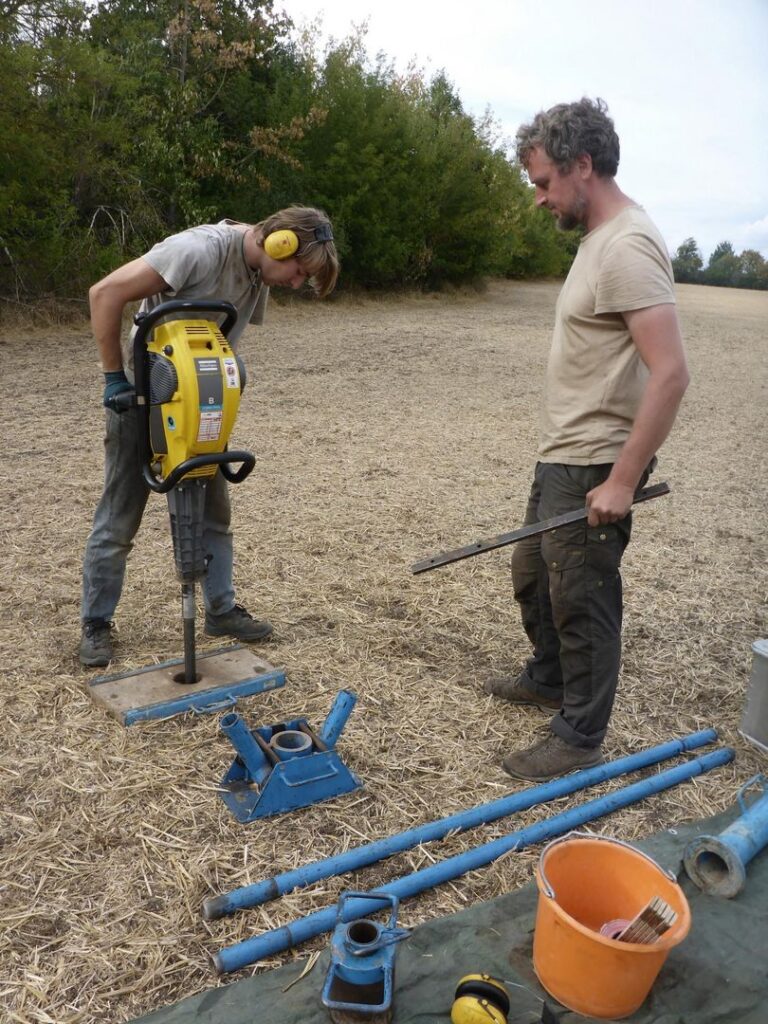
Rather than relying on accidental excavation, the team combined historical documentation, geophysical surveying, and sediment coring to locate a burial structure matching descriptions found in 14th-century sources. Medieval records recount that during the devastating plague outbreak of 1350, approximately 12,000 victims were buried in eleven large pits outside Erfurt—yet none of these graves had ever been precisely located.
Electrical resistivity mapping revealed a massive subsurface anomaly measuring roughly 10 × 15 meters, with deposits extending more than three meters deep. Borehole samples contained heavily mixed sediments and fragmented human remains. Radiocarbon dating firmly places the remains in the 14th century, aligning with the peak years of the Black Death.
“Our results strongly suggest that we have identified one of the plague mass graves described in the Erfurt chronicles,” explains Dr. Michael Hein, geographer at Leipzig University and lead author of the study. “Definitive confirmation will come with the planned archaeological excavation.”
Reconstructing Europe’s deadliest pandemic
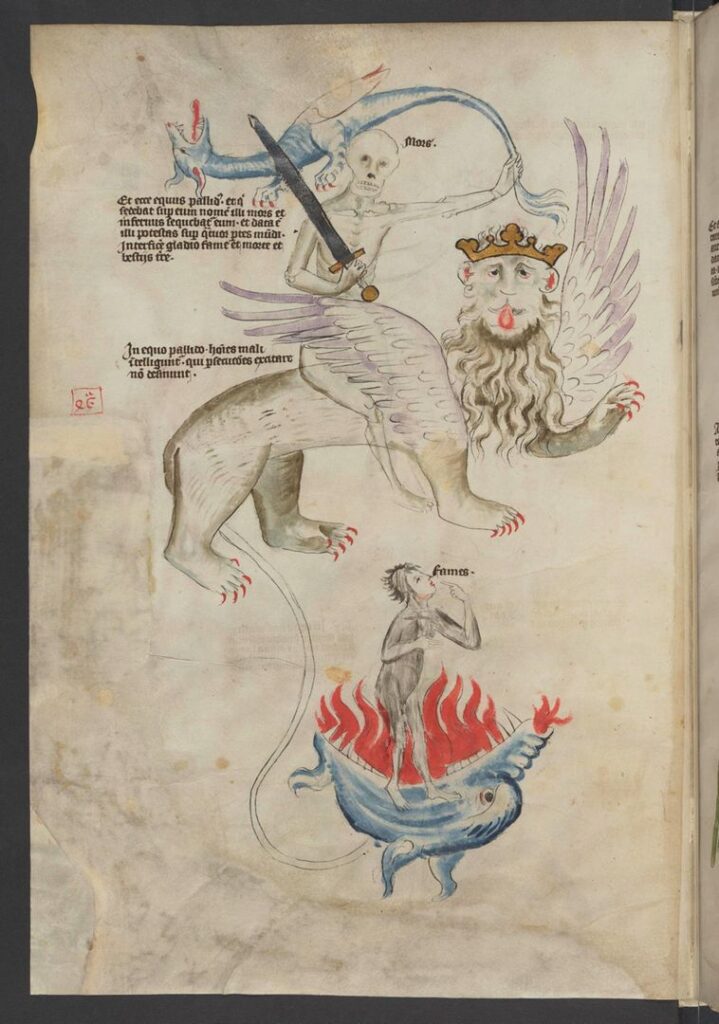
Between 1346 and 1353, the Black Death wiped out up to half of Europe’s population, depending on region. Central Europe’s eastern frontier of infection ran through Thuringia, making Erfurt a critical yet understudied zone in plague research.
The newly identified burial site lies along the edge of the Gera River valley, in an area dominated by fertile chernozem soils. These dry, well-drained soils contrast sharply with the surrounding floodplains—areas medieval communities deliberately avoided for burial.
“This choice makes sense not only from a modern soil-science perspective,” notes Dr. Martin Bauch of the GWZO, “but also in light of the medieval miasma theory, which linked disease to foul vapors rising from decaying matter.” Damp soils, medieval thinkers believed, intensified the spread of illness.
The landscape as a historical archive
By integrating pedology, geophysics, and archival history, the researchers demonstrate how landscapes themselves function as historical records. Settlement patterns, burial decisions, and epidemic responses were all shaped by environmental constraints that can still be read today.
“A major achievement of this project is that the discovery was made through interdisciplinary prospection, not chance,” emphasizes Dr. Ulrike Werban of the Helmholtz Centre for Environmental Research. This approach, the team argues, offers a new model for identifying epidemic and conflict-related mass graves without disturbing sensitive sites.
Why this discovery matters
Confirmed and precisely dated Black Death mass graves remain extremely rare—fewer than ten are currently known across Europe. The Neuses site therefore represents a major addition to the material record of medieval pandemics and deepens understanding of Erfurt’s historical landscape, which received UNESCO World Heritage status in 2023.
Beyond archaeology, the find opens the door to genetic and anthropological analyses, potentially illuminating the evolution of Yersinia pestis, patterns of mortality, and how medieval societies coped with mass death.
Future excavations, conducted in collaboration with the Thuringian State Office for Heritage Management and Archaeology, will supply material for DNA research at the Max Planck Institute for Evolutionary Anthropology.
“This discovery is not only about the past,” says Professor Christoph Zielhofer, head of Leipzig University’s Historical Anthropospheres research group. “It also shows how modern interdisciplinary science can help locate mass graves—an issue that remains tragically relevant in the 21st century.”
Cover image: An original visual interpretation generated with AI, inspired by medieval iconography and recent archaeological findings related to the Black Death.
Michael Hein, et al. What the landscape can tell: An integrative stratigraphic prospection approach to localize a Black Death mass grave in Erfurt/Central Germany, PLOS One (2026). DOI: 10.1371/journal.pone.0337410. journals.plos.org/plosone/arti … journal.pone.0337410