
Nearly 300 Roman coins have been discovered near the Danube in eastern Croatia, where archaeologists believe a small frontier garrison may have buried its pay during a moment of danger.
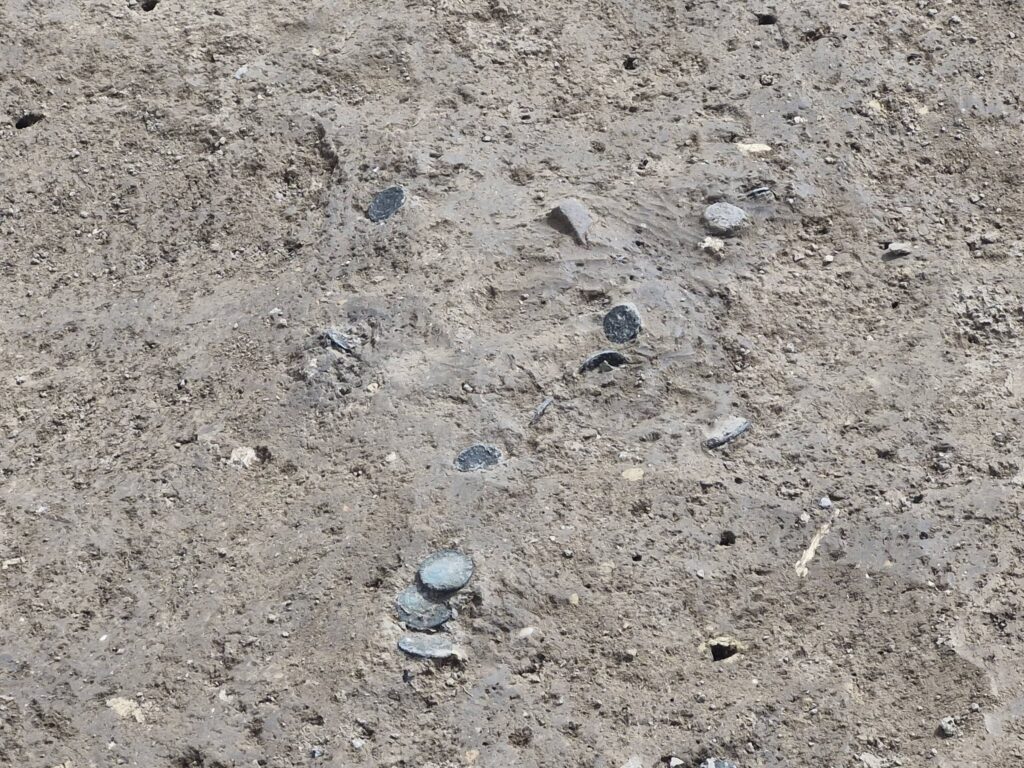
The hoard was unearthed in Mohovo, a village on the banks of the Danube River, during archaeological excavations focused on the Roman Empire’s defensive network along the river. The coins, dating to the 4th century AD, were found about 1.5 meters below the surface in the area of a Roman military lookout post.
At first, it was just one coin in the soil. Then another appeared. As the number grew, archaeologists realized they were dealing with something far more significant than a scattered loss. The find had the character of a buried Roman coin hoard, possibly hidden by soldiers who never returned to recover it.
A small post on a dangerous frontier
Mohovo sits in a landscape where the Danube once formed part of Rome’s northern frontier. This river boundary, known as part of the Roman limes, was not protected only by large forts. It also depended on smaller watchtowers and military posts positioned near crossings and routes where movement had to be monitored.
According to archaeologists involved in the research, larger Roman camps stood at Ilok and Sotin, while smaller lookout points were placed between them. These posts likely held only a small number of soldiers, but their role was important. They watched the river, controlled movement and helped protect the frontier from sudden threats.
The Mohovo discovery appears to belong to that military world. The coins were not found in a city, market or wealthy villa. They were recovered from a frontier position, where Roman soldiers lived close to the edge of imperial control.
Soldiers’ pay hidden underground
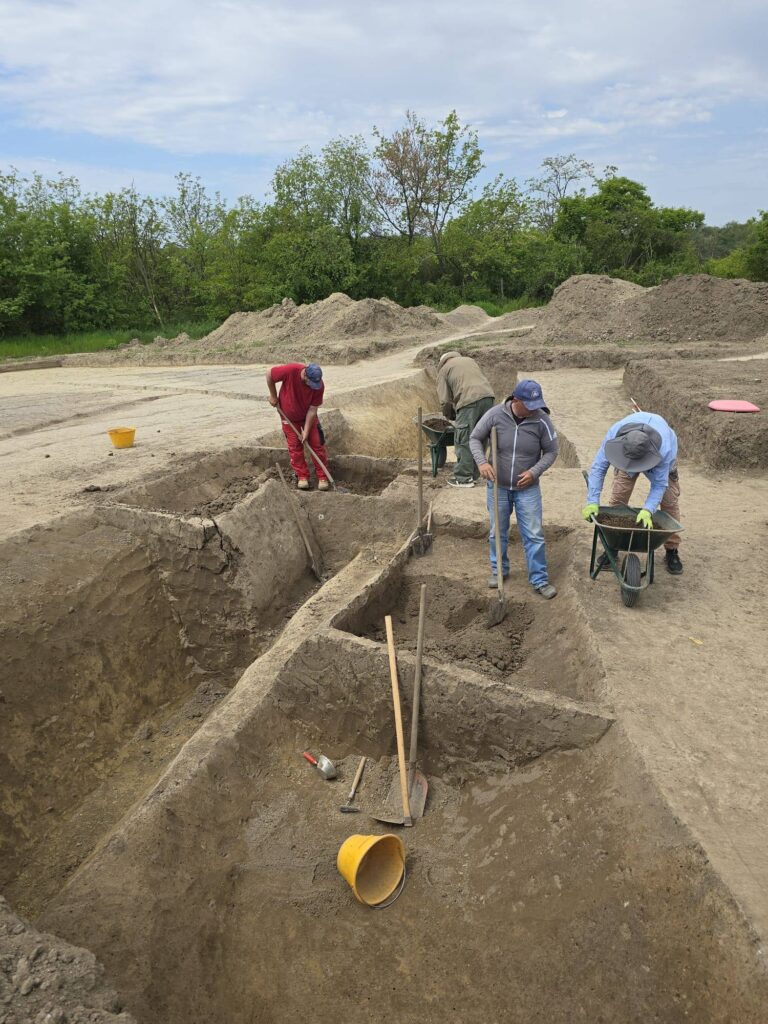
Researchers believe the coins may represent the pay of the garrison stationed at the Mohovo watchtower. One interpretation is that the soldiers buried the money during an attack or another urgent threat, intending to return for it later.
They never did.
That possibility gives the discovery a rare human weight. The hoard may preserve the trace of a specific moment, when soldiers on the Danube frontier chose to hide their money rather than carry it with them. Whether they were killed, forced to flee, reassigned or cut off from the post remains unknown.
What survived was the pay they left behind.
Archaeologists have described the discovery as exceptional for Croatia, especially because so many coins from the same general period were found together in one place. After more than 1,500 years underground, the hoard offers a direct glimpse into the military life of the late Roman frontier.
Most coins date to Emperor Valentinian I
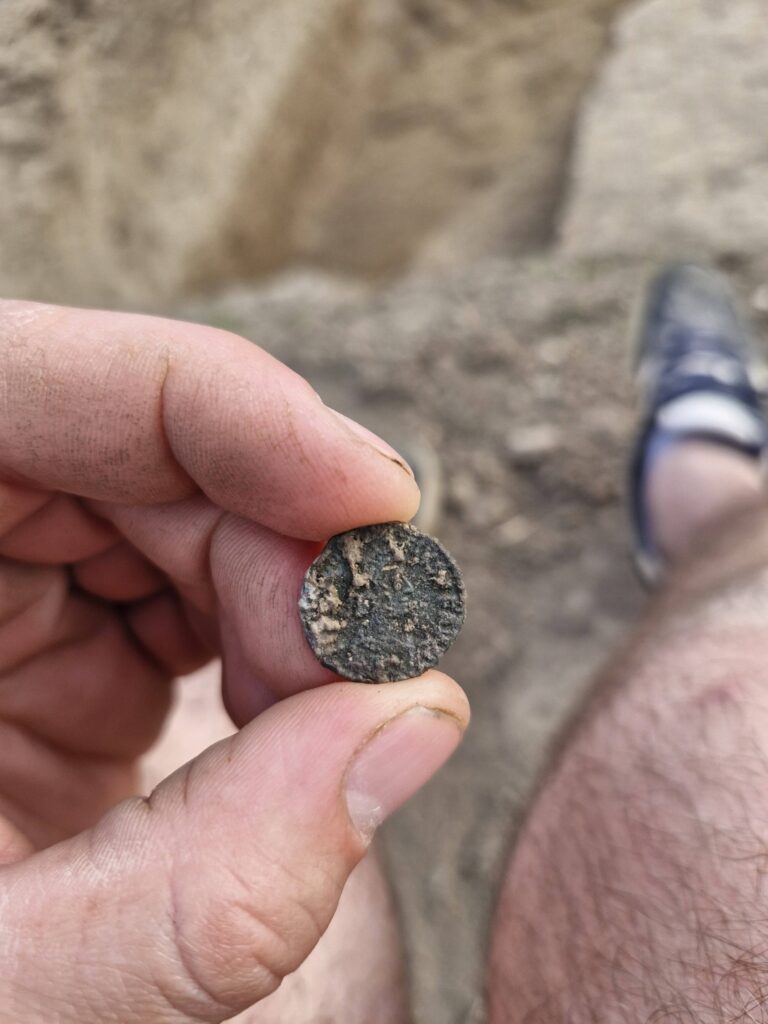
Most of the coins were minted during the reign of Emperor Valentinian I, who ruled the western Roman Empire from AD 364 to 375. The detail is especially significant because Valentinian was born in Cibalae, the Roman city located in the area of modern Vinkovci in eastern Croatia.
His reign was marked by constant attention to frontier defense. In the 4th century, the Roman Empire faced growing pressure along its borders, and the Danube remained one of the most strategically important military zones in Europe.
The Mohovo coins therefore fit into a wider late Roman story. They belong to an age when imperial authority depended heavily on soldiers stationed in forts, watchtowers and river posts. These men guarded crossings, watched movement beyond the frontier and formed the first line of response when danger approached.
Everyday objects from a Roman watchtower
The excavation has also produced other Roman finds, including fibulae, the brooches used to fasten clothing, and an unusual fishhook. These objects add another layer to the site.
A frontier post was not only a military installation. It was also a place where people waited, repaired clothing, prepared food and adapted to life beside the river. The fishhook, in particular, is a small but vivid reminder that soldiers on the Danube did not live only through orders and patrols. They also relied on the landscape around them.
Mohovo is already known for palaeontological discoveries, including mammoth remains. But the wider area also contains archaeological traces from prehistory, antiquity and the Middle Ages. Researchers say three to four additional potential sites have now been identified nearby and may also be linked to Roman military watchtowers.
If confirmed, those sites could help archaeologists reconstruct how Rome organized this stretch of the Danube frontier and how smaller posts supported the larger military camps of eastern Croatia.
A buried story returns from the Danube soil
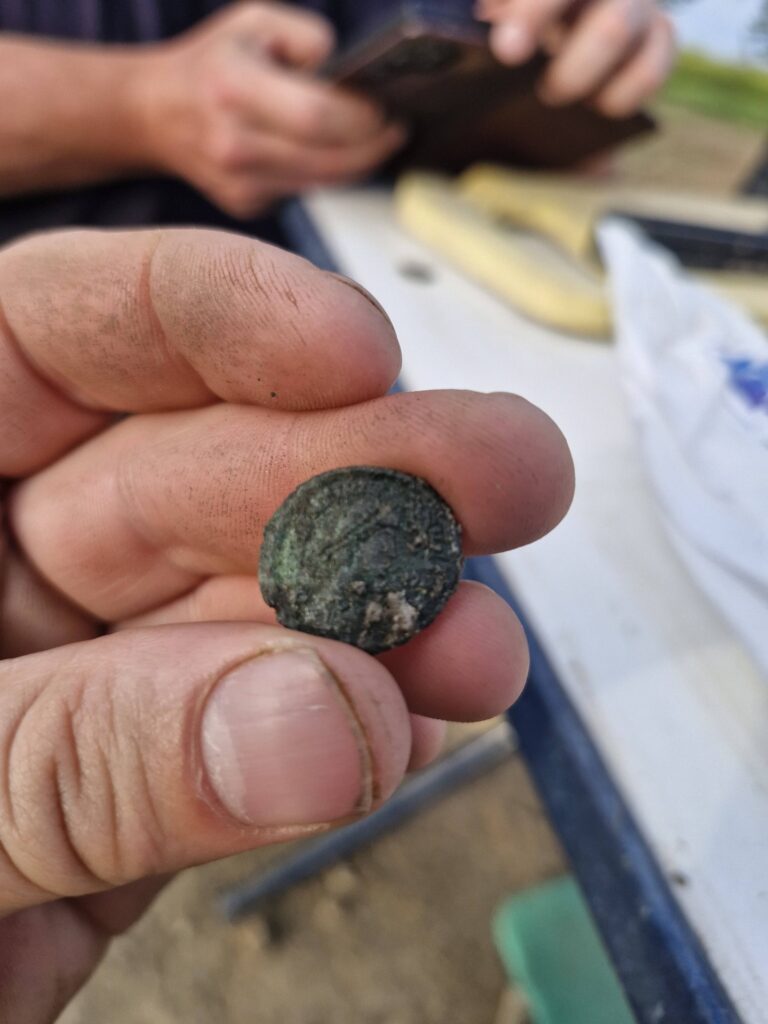
The coins will now undergo restoration, conservation and scientific analysis. Specialists will examine their mint marks, wear patterns and chronological range, details that may help clarify when the hoard was buried and how money circulated among troops in this frontier zone.
Once the work is completed, the coins are expected to be displayed in a museum.
For now, the Mohovo hoard stands as a rare survival from Rome’s military edge. Nearly 300 coins, hidden in the ground and left untouched for more than 1,500 years, have returned with the quiet force of an unfinished story.
Somewhere on the Danube frontier, Roman soldiers buried their pay.
The soil kept it until now.