
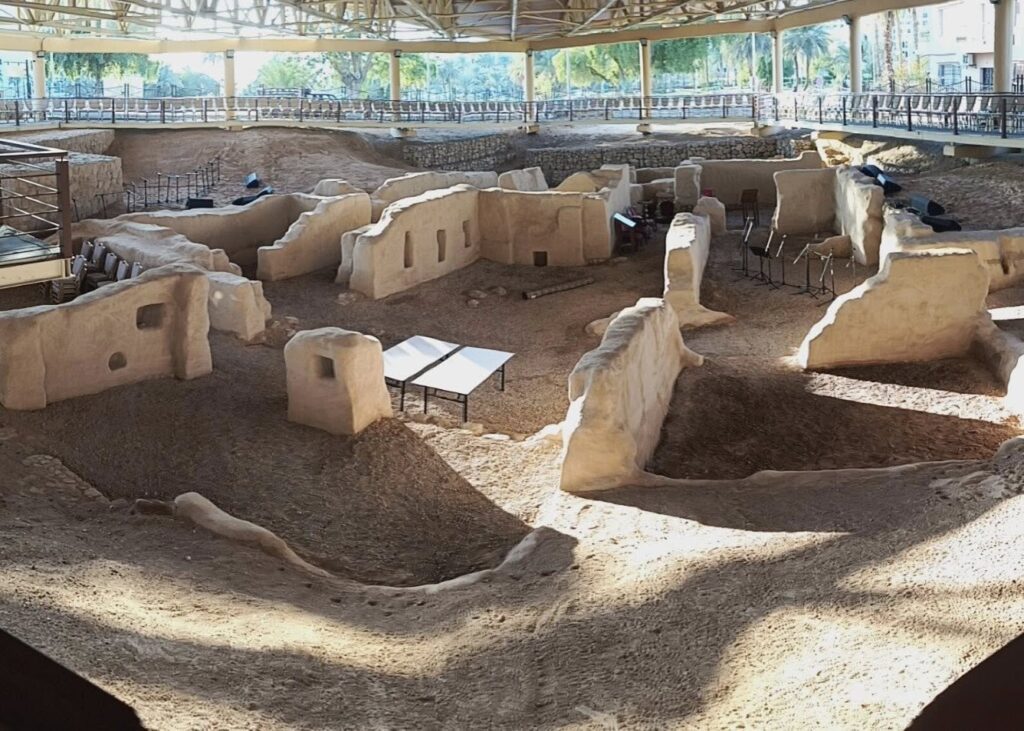
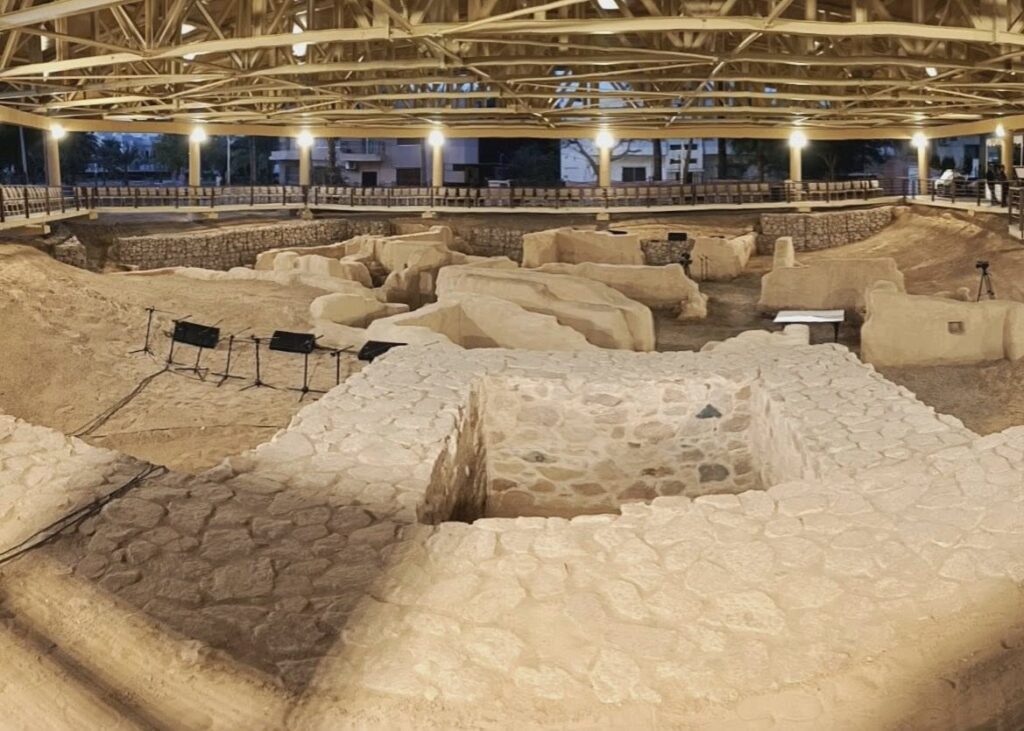
Jordan’s Red Sea port city of Aqaba has brought one of early Christianity’s rarest monuments back into public view. The Aqaba Archaeological Church, dated to around 290 AD, has officially reopened following a comprehensive restoration, reaffirming its place among the earliest known Christian churches in the world.
A Church Built Before Christianity Was Legal
What sets the Aqaba church apart is not only its age, but when it was built. Archaeological evidence places its construction decades before the Edict of Milan in 313 AD, when Christianity was still a persecuted religion within the Roman Empire.
This makes the Aqaba church one of the very few purpose-built Christian structures known from the pre-Constantinian period, offering scholars a rare opportunity to study how early Christian communities organized sacred space under uncertain political conditions.
Unlike later basilicas sponsored by imperial authority, the Aqaba church reflects a formative phase of Christian architecture, shaped by local communities rather than state patronage.
Restoration as a Statement of Cultural Coexistence
The reopening ceremony was held on Monday and led on behalf of King Abdullah II by Jordan’s Minister of Tourism and Antiquities, Imad Hijazin. In official remarks, Hijazin framed the restoration as more than a conservation project.
The site’s revival was presented as a reaffirmation of Jordan’s long-standing commitment to protecting both Islamic and Christian heritage, while also strengthening Aqaba’s position as a destination for cultural and spiritual tourism.
This approach reflects Jordan’s broader heritage policy, where archaeological preservation is closely tied to narratives of religious coexistence and continuity rather than isolated monument care.
Aqaba as a Crossroads of Faith and Trade
The wider historical setting of the church was emphasized by Shadi Majali, Chairman of the Aqaba Special Economic Zone Authority. He described the site as a reminder of Aqaba’s long role as a meeting point for pilgrims, traders, and diverse communities.
Located at the junction of ancient land and maritime routes linking Arabia, the Levant, and Egypt, Aqaba functioned as a port city where ideas, beliefs, and goods circulated freely. The presence of such an early Christian church within this urban fabric underscores how Christianity took root along major commercial and travel corridors of the Roman world.
Religious Leaders Highlight Jordan’s Legacy of Pluralism
Christian leaders from different traditions also addressed the symbolic meaning of the reopening. Orthodox Patriarch of Jordan Archbishop Christophoros Attallah described the event as a reflection of Jordan’s enduring identity as a land of faith and human dignity, stressing that respect for others lies at the core of genuine belief.
Similarly, Latin Patriarchal Vicar in Jordan Archbishop Iyad Twal pointed to the Aqaba church as concrete evidence of Jordan’s status as a cradle of civilizations and religions, where cultural and religious pluralism developed organically over centuries.
Why the Aqaba Church Matters Today
From an archaeological perspective, the Aqaba Archaeological Church is especially valuable because it embeds early Christianity within a living Roman port city rather than an isolated sacred landscape.
It allows researchers to trace how early Christian worship spaces emerged from ordinary urban contexts, shaped by trade, mobility, and multicultural interaction. For modern audiences, the restored site now stands as both an academic reference point and a powerful reminder of nearly seventeen centuries of shared religious history on Jordanian soil.