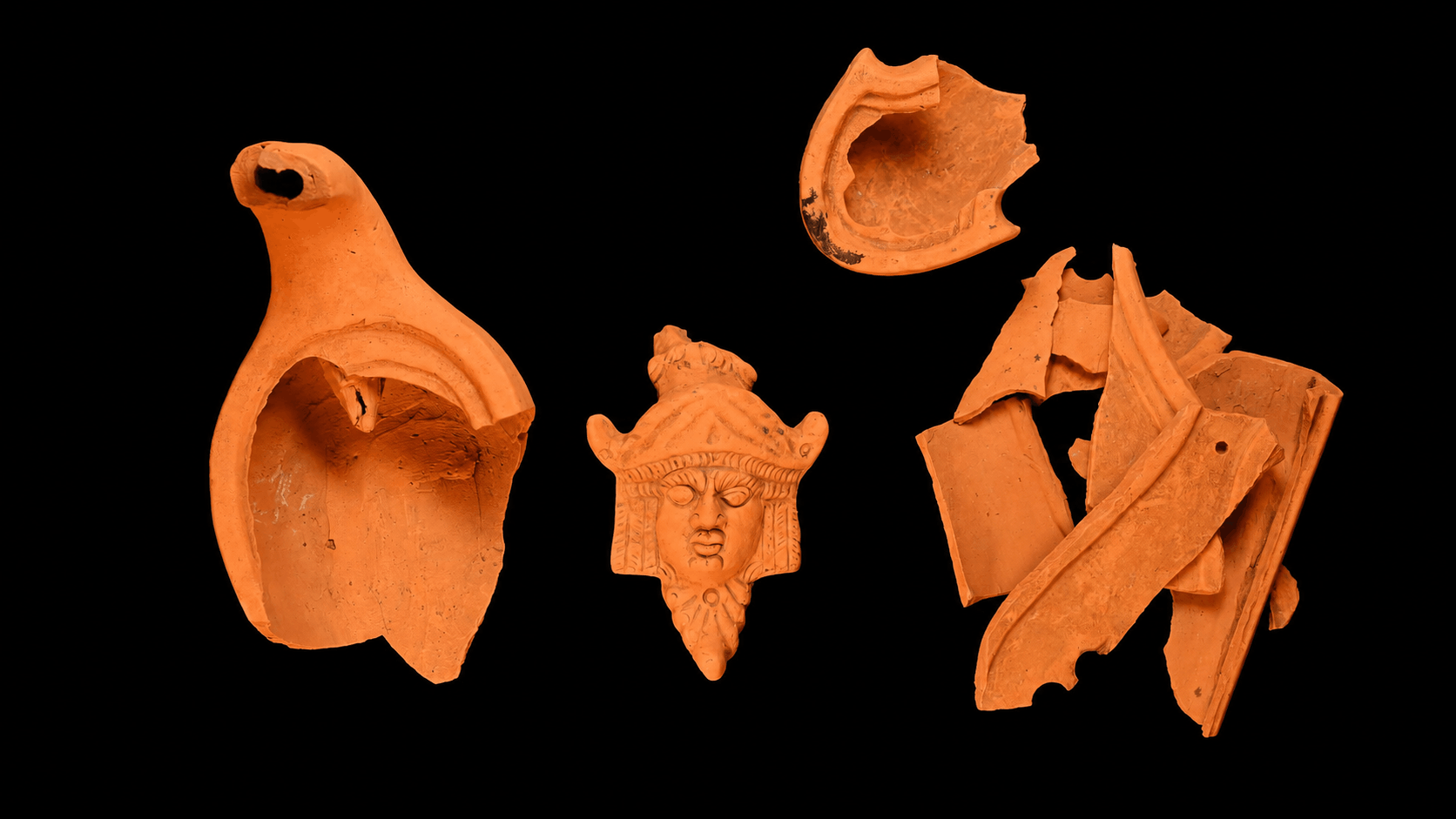
Archaeologists excavating a Roman cemetery beneath the future Ljubljana Passenger Centre in Slovenia have uncovered an unusually elaborate ceramic oil lamp whose tall handle ends in a finely modelled theatre mask.
The object was found in one of the more richly furnished graves associated with Emona, the Roman predecessor of modern Ljubljana. Oil lamps are common discoveries in Roman-period burials, but this example stands apart for its rare form and detailed decoration.
A Rare Variation on a Familiar Roman Object
Roman ceramic lamps were generally manufactured in specialised workshops using moulds that allowed large numbers of similar objects to be produced and distributed across the empire. As a result, lamps recovered from distant Roman provinces can closely resemble one another.
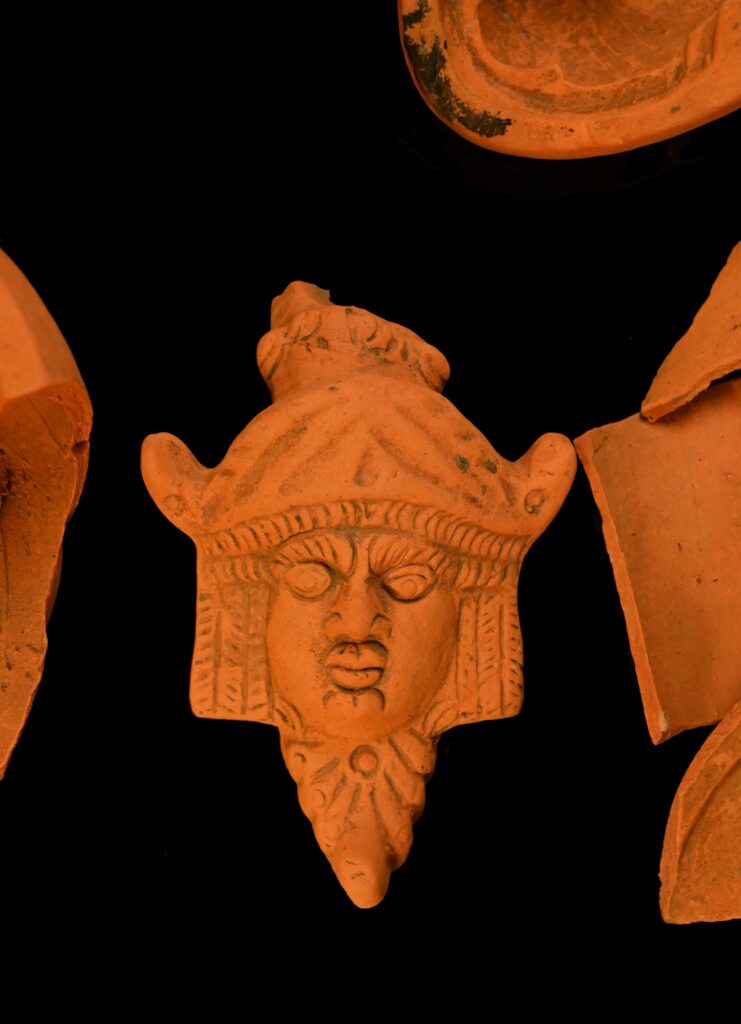
The newly discovered example is considerably more distinctive. Its high handle terminates in a realistic theatrical face, with carefully formed features and rows of sculpted curls. The workmanship gives an otherwise familiar household and funerary object an individual character.
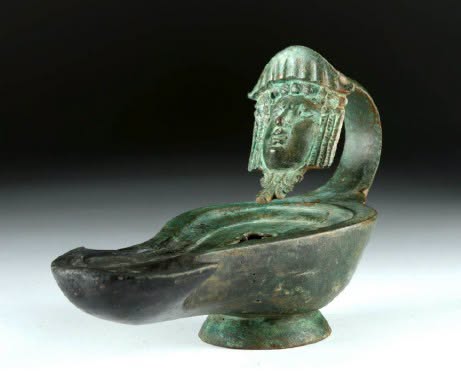
According to the archaeological team, comparable mask-shaped handles are known primarily from a limited number of bronze lamps dating to the first and second centuries AD. Ceramic versions are much rarer. A precise date for the Ljubljana lamp has not yet been announced.
Theatre masks were widely recognised symbols throughout Roman visual culture. They appeared not only in performance but also in mosaics, wall paintings, sculpture and decorative objects. The mask on the lamp may have been chosen for its artistic appeal, its cultural associations or its importance to the individual buried with it, although its precise meaning remains unknown.
Beneath Ljubljana’s Modern Transport Hub
The lamp emerged during archaeological investigations linked to the construction of Ljubljana’s new passenger centre.
The excavated graves belong to Emona’s northern cemetery, part of an extensive burial landscape that once developed outside the Roman settlement. As in many Roman cities, cemeteries were located beyond the inhabited centre, often beside roads used by travellers entering and leaving the town.
Recent work in the area has documented 125 Roman-period graves, most of them cremation burials. Reported grave goods include ceramic vessels, jewellery, glass containers and oil lamps. Together, these finds are helping archaeologists reconstruct differences in burial practice, personal wealth and the objects selected for the dead.
The excavations are also revealing how much of Ljubljana’s ancient history remains preserved beneath its modern streets, railway lines and construction sites.
Emona developed as a Roman colony in the early first century AD and remained occupied for several centuries. Archaeological discoveries across central Ljubljana have exposed sections of its streets, defensive walls, houses, cemeteries and early Christian buildings.
An Individual Object from Emona’s Cemetery
Oil lamps could serve practical purposes, but their presence in graves also placed them within the ritual world of Roman burial. Their exact meaning may have varied between individuals, families and communities, so the role of a particular lamp cannot be determined from its form alone.
In this case, the importance of the discovery lies in the contrast between standardised production and exceptional craftsmanship. Most Roman lamps followed widely repeated models. This one was given a tall sculptural handle and a face detailed enough to preserve the maker’s attention to expression and hair.
The lamp therefore offers more than another example of Roman grave furniture. It shows how a familiar, mass-produced object could be transformed into something visually striking and perhaps personally meaningful before accompanying an inhabitant of Emona into the grave.
Cover Image: Fragments of the rare Roman ceramic oil lamp discovered in Emona’s northern cemetery in Ljubljana, including its high handle ending in a finely modelled theatre mask. Credit: Hana Elikan Longo / (Ne)odkrita arheologija Ljubljane