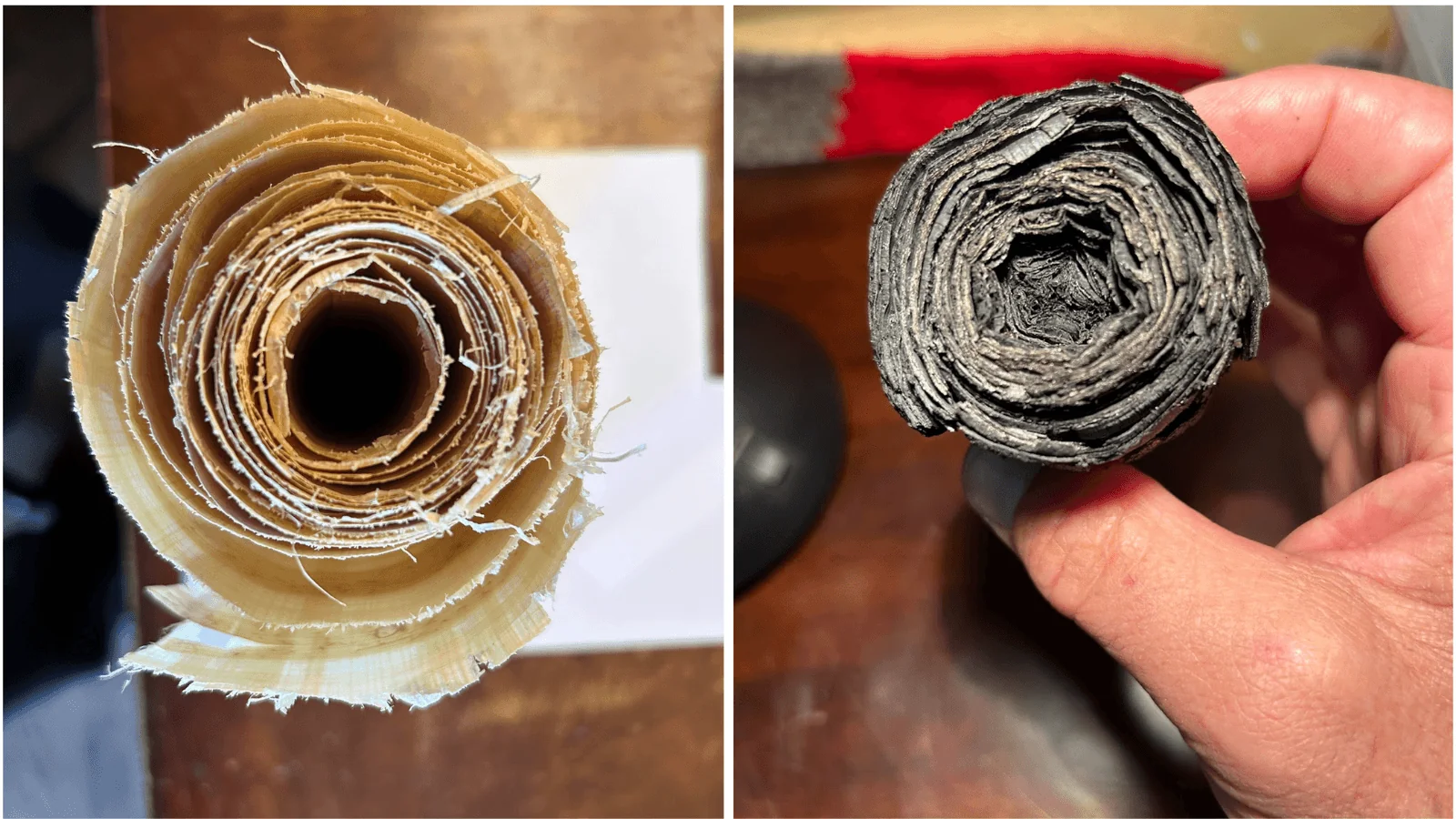
To help read 2,000-year-old scrolls buried by Mount Vesuvius, scientists created new papyrus manuscripts, wrote on them with lead-laced ink and deliberately burned them. The unusual experiment could provide a practical way to identify the most promising texts among the carbonized remains of the Herculaneum library.
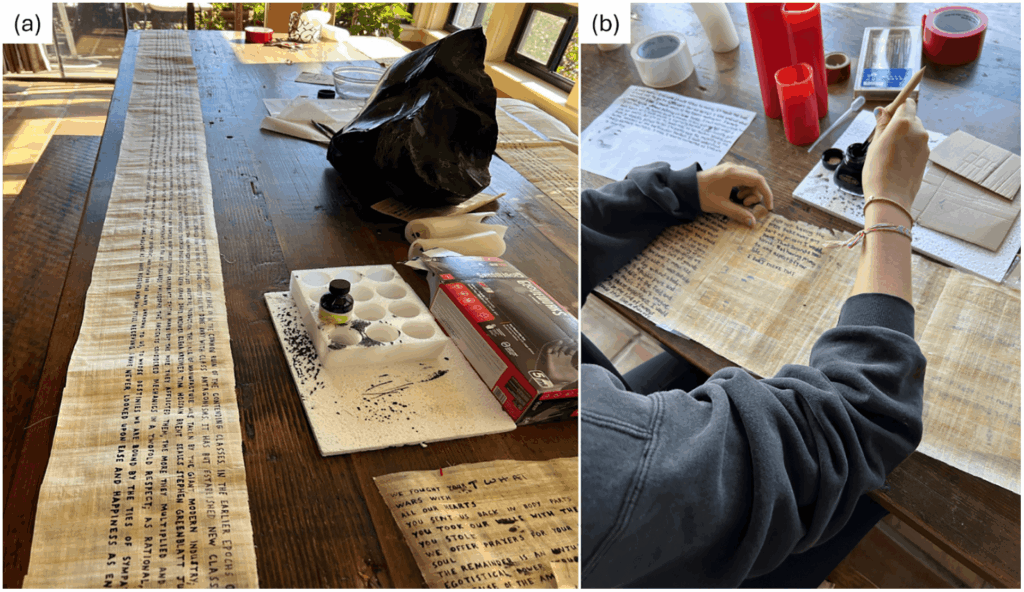
The laboratory-made scrolls were not filled with ancient philosophy. High school students recruited through friends of the project’s lead researcher copied lines from Star Wars, the Bible and the 1960s science-fiction series The Outer Limits before the papyrus was rolled tightly and heated in a container with very little oxygen.
Once carbonized, the scrolls resembled the fragile blackened objects recovered from Herculaneum. Yet the researchers already knew exactly what was hidden inside, allowing them to test whether X-rays and virtual-unrolling software could recover the words without physically opening the papyrus.
The results, published in the journal PLOS ONE, suggest that even very small amounts of lead in ancient ink could make some Herculaneum scrolls dramatically easier to read.
A library turned to charcoal
When Mount Vesuvius erupted in 79 CE, volcanic material overwhelmed Herculaneum and nearby Pompeii. At the Villa of the Papyri, a luxurious Roman residence overlooking the Bay of Naples, the intense heat carbonized an extensive library rather than destroying it completely.
Around 1,800 scrolls and fragments from the villa are now held in collections in Italy, France and England. The Villa of the Papyri preserves the only surviving library collection known from the ancient world, although most of its contents were badly damaged and carbonized.
The collection may contain works of philosophy, literature and science that disappeared elsewhere because they were never copied into later manuscripts. Scrolls opened in the past have already revealed previously unknown texts, many associated with the Epicurean philosopher Philodemus, who lived at Herculaneum during the first century BCE.
The same process that preserved the papyri also made them almost impossible to handle. Following their discovery in 1752, attempts to unfold the tightly rolled objects often caused them to break apart or collapse into ash, eventually prompting Italian authorities to halt the practice.
Modern X-ray tomography offers a safer alternative. It can map the layers inside a scroll, while computer software separates and flattens those layers virtually. The greater challenge comes afterward: identifying dark carbon-based ink against papyrus that has itself been reduced largely to carbon.
Why lead changes the picture
Douglas Seiler, an affiliate of the University of California, Berkeley, suspected that lead present in some ancient inks might provide the contrast researchers needed. Unlike carbon ink, lead absorbs X-rays strongly and can appear as a bright signal against the darker papyrus.
To test the idea, Seiler and his colleagues obtained modern Egyptian papyrus, traditional reed pens and lampblack ink. They added carefully measured quantities of lead nitrate to different ink samples, had passages written across the sheets and then carbonized the finished scrolls in a high-temperature furnace.
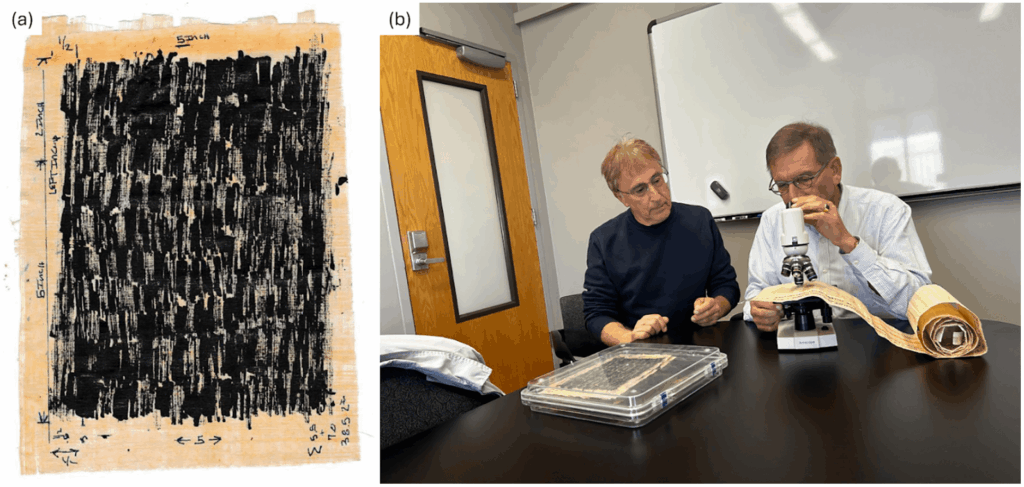
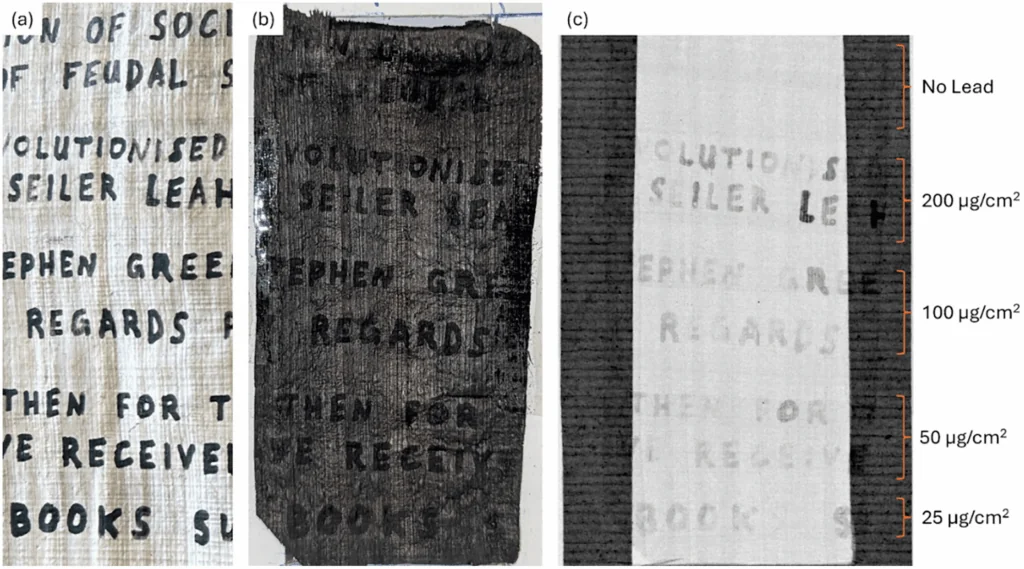
Researchers at the US National Institute of Standards and Technology subsequently scanned one of the blackened scrolls using X-ray tomography. Custom software originally developed to examine the tightly wound internal layers of lithium-ion batteries was adapted to follow the uneven papyrus sheets and virtually unfold them.
The hidden lettering became visible because the leaded ink absorbed as much as 25 times more X-rays than the carbonized papyrus. According to the study, concentrations as low as 25 micrograms of lead per square centimeter could be detected.
This does not mean every word inside the Herculaneum collection can suddenly be recovered. Many ancient scribes used ink made primarily from soot, water and a plant-based binder, leaving little contrast after carbonization. The method instead offers a way to identify scrolls containing metallic ink, which may prove easier to read than those written entirely in carbon-based ink.
Finding the most promising scrolls
Perhaps the study’s most practical result came from a smaller and less elaborate instrument. The team showed that a handheld X-ray fluorescence, or XRF, scanner could detect lead in the model scroll after carbonization.
Conservators could potentially use such a device to screen Herculaneum papyri without opening them or immediately subjecting every object to a demanding high-resolution CT scan. Scrolls showing signs of lead could then be prioritized for detailed imaging.
Evidence suggests that suitable examples may survive. Lead has previously been identified in ink on at least one Herculaneum fragment, although the collection has never been systematically surveyed for it. Tests on other ancient papyri at Berkeley have also detected lead or copper in some texts, particularly examples dating from the first century CE onward.
The experiment therefore provides a proof of concept rather than the reading of a newly discovered ancient work. Before the technique can reveal lost texts, researchers will need access to the original scrolls and permission to screen them for metallic elements.
Training algorithms without risking the originals
The replicas may also help improve the software used to read damaged manuscripts. Because the researchers know exactly what was written on each sheet and how much lead its ink contains, the scans can provide reliable training material for text-detection algorithms.
Future experiments could vary the ink recipes, metal concentrations and carbonization conditions. Researchers would then be able to test and refine their methods without repeatedly exposing irreplaceable ancient objects to experimental procedures.
Earlier virtual-unrolling projects have already recovered Greek writing from several Herculaneum scrolls using X-ray scans and machine learning. Those achievements depended on detecting extremely subtle differences between ink and papyrus, making the process slow and technically difficult.
Lead would not replace those methods, and many scrolls may contain none at all. A systematic search for the metal could now determine whether some unopened Herculaneum scrolls are far more readable than their blackened surfaces suggest.
Cover Image: A model papyrus scroll before and after carbonization, part of an experiment designed to help researchers read ancient scrolls damaged by Mount Vesuvius. Credit: Seiler et al., 2026, PLOS ONE, CC0