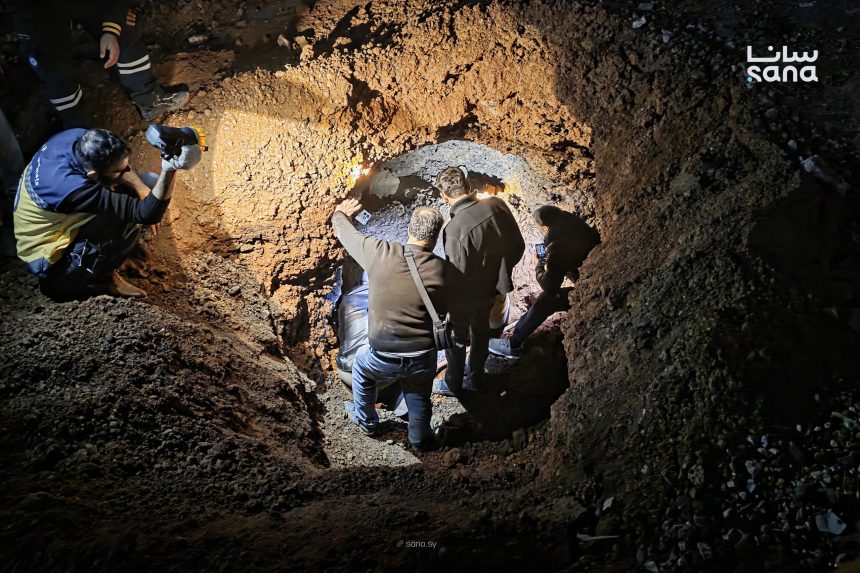
A sensational claim raced across Syrian social media this week: a newly opened construction pit in the town of al-Hara, in southern Daraa, supposedly concealed a secret cave overflowing with ancient gold. Crowds rushed to the site, videos went viral, and online speculation spiraled. But by the time archaeologists reached the scene, the story of the “gold cave” had already collapsed under the weight of real evidence.
How a Construction Accident Became a Treasure Frenzy
The rumor emerged after a local resident, digging a basement with heavy machinery, caused part of the ground to collapse. A small opening appeared, and within hours social media users began circulating posts describing it as the entrance to a treasure-filled cavern. Some shared recycled footage of gold bars and statues—none of which originated from al-Hara.
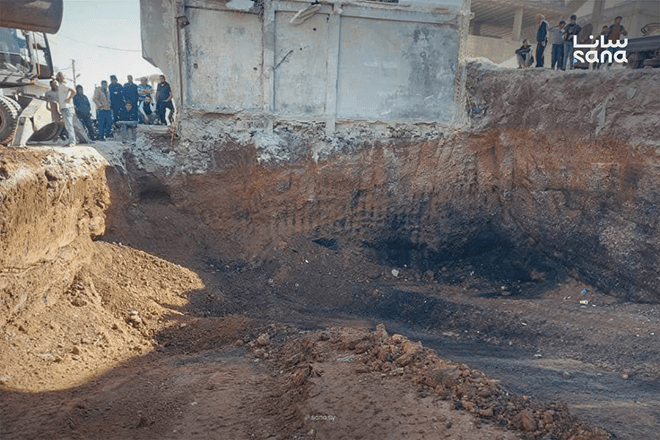
As the videos spread across X and TikTok, hundreds of residents gathered around the site hoping to witness a once-in-a-lifetime discovery. Internal security forces were deployed to stabilize the area and prevent injuries.
What Experts Found Inside the Opening
Late that night, a specialized team from the Daraa Antiquities Directorate conducted a controlled inspection. Their findings left no room for doubt.
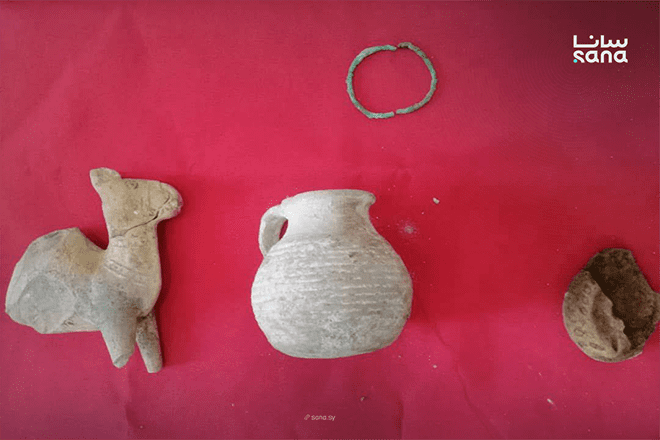
Inside the cavity was a Roman-era burial chamber, not a treasure hoard. The tomb’s structural layout and the types of objects inside matched well-documented funerary patterns from the region.
Archaeologists recovered:
- a bronze bracelet,
- fragments of clay lamps,
- pieces of ceramic jars.
No gold objects were discovered. No evidence suggested that the chamber ever contained anything resembling treasure.
Officials described the artifacts as scientifically valuable, but emphasized that their significance lies in cultural history—not in monetary worth.
Authorities Move to Contain the Rumor
The Directorate-General of Antiquities and Museums issued a formal statement rejecting the treasure claims and stressing that all legitimate archaeological discoveries are announced transparently through official channels.
Heritage officials also warned that misinformation threatens archaeological sites, especially in areas where economic hardship fuels interest in supposed hidden wealth. Uncontrolled crowds, driven by viral rumors, risk damaging fragile structures and complicating recovery efforts.
Civil Defense teams later confirmed that the pit contained remnants of old, empty graves, consistent with Roman-era burial practices.
Why the Real Discovery Still Matters
Although the absence of gold disappointed many onlookers, the find contributes to a broader understanding of Roman-era settlement across the Hauran region. Daraa’s landscape contains dozens of funerary structures, agricultural installations, and military outposts dating to the Roman period.
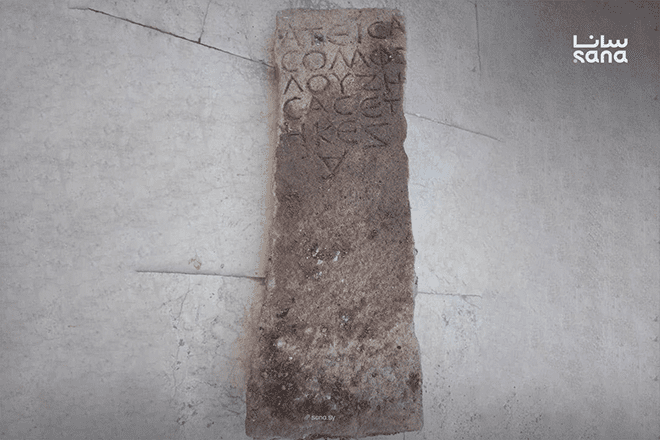
The chamber in al-Hara adds another piece to this archaeological puzzle. Modest grave goods like lamps and bracelets help researchers reconstruct daily life, trade patterns, and ritual practices in a frontier zone of the Roman Empire.
In other words, the scientific value of the discovery far exceeds the allure of a fictional treasure cave.
A Case Study in Heritage, Hope, and Misinformation
The al-Hara incident highlights an increasingly common challenge: digital rumor cycles move faster than archaeological verification. A brief collapse in a construction pit can, within hours, transform into a global “breaking story” of hidden treasure.
For heritage specialists, the episode underscores the need for rapid communication, public awareness, and protective measures in regions where archaeological remains lie close to the surface.
Cover Photo: Archaeologists and Civil Defense personnel examining the exposed chamber at night. Their inspection debunked viral treasure claims and confirmed the feature as a Roman-era tomb. Credit: SANA