
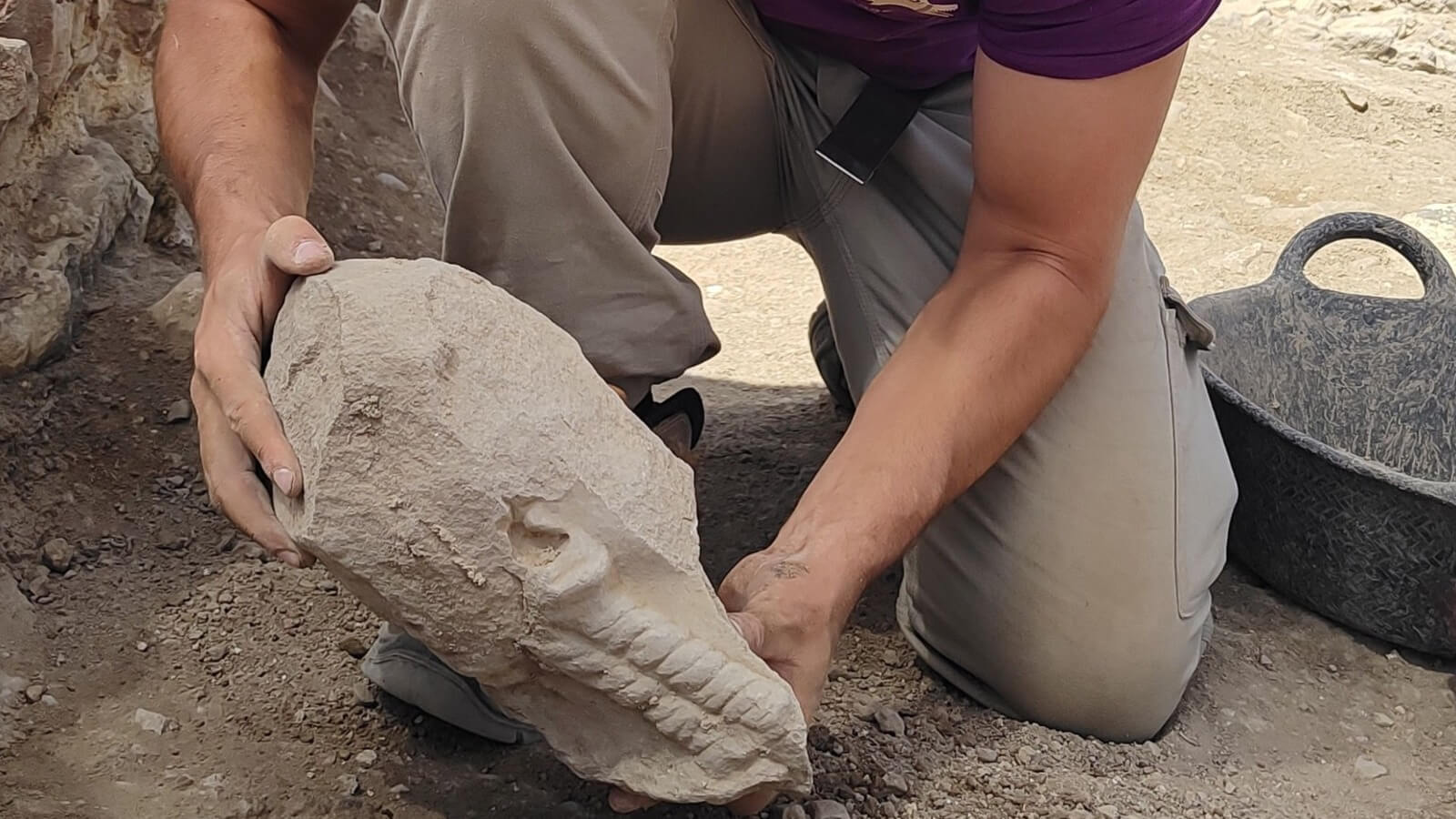
The nearly life-size limestone head may once have belonged to an Iberian funerary monument associated with elite identity. Centuries later, it was stripped of its original meaning and reused as an ordinary building stone.
Archaeologists excavating the ancient city of Libisosa in southeastern Spain have discovered the head of an exceptional Iberian statue dating to the fifth or fourth century BCE. The limestone fragment was found embedded in the wall of a Roman granary built several centuries after the sculpture was created.
Although the face is missing, both sides and the back of the head remain sufficiently preserved to reveal its most striking feature: an elaborate hairstyle formed by braids gathered into a ponytail, with curled locks falling along the sides.
The almost life-size proportions and careful workmanship distinguish the head from more ordinary representations. According to the regional government of Castilla-La Mancha, very few sculptures with comparable hairstyles are known from the Iberian world.
An identity preserved through hairstyle
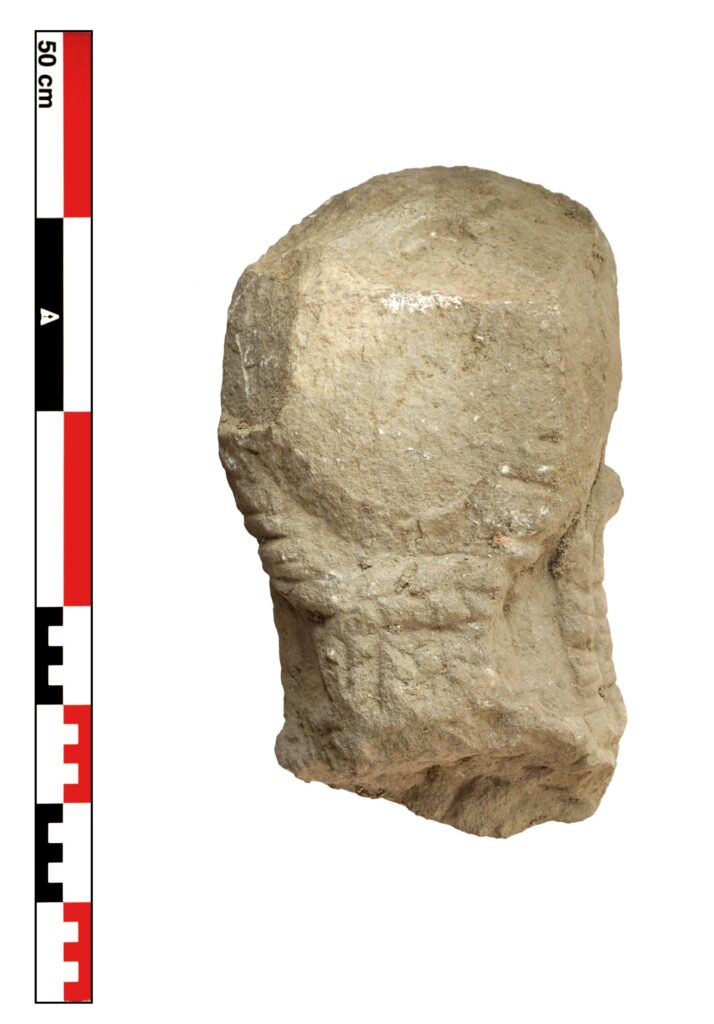
The loss of the face prevents archaeologists from identifying the figure through its facial features. Its carefully carved hair, however, provides important clues about the person represented.
The hairstyle suggests that the sculpture may depict a young man. Researchers believe the head could have belonged either to a standing figure or to a horseman, two forms closely associated with elite representation in Iberian art.
The closest male comparison identified by the excavation team is the horseman sculpture from the Los Villares necropolis at Hoya Gonzalo, also in Albacete Province. Female figures with similarly elaborate hairstyles are known from the Iberian cemetery of El Cigarralejo in Murcia, but sculptures of this type remain rare.
The newly discovered head may originally have formed part of an ancient Oretanian funerary monument. The Oretani were one of the Iberian peoples who occupied areas corresponding to parts of modern Albacete, Ciudad Real and Jaén before Roman domination.
Its scale and artistic quality indicate that the sculpture was probably created for a prominent monument rather than as an everyday decorative object. The excavation team considers it evidence of high-level Iberian craftsmanship connected with aristocratic self-representation and the public expression of family identity.
From funerary monument to Roman wall
The sculpture was not discovered in its original setting. It had been removed from the monument to which it once belonged and reused in the perimeter wall of a large granary associated with Libisosa’s Roman forum.
The granary was constructed during the reign of Emperor Augustus, several centuries after the head had been carved. By that time, the earlier monument appears to have lost the political and religious significance it once carried, allowing its stones to be reused in buildings belonging to the Roman colony.
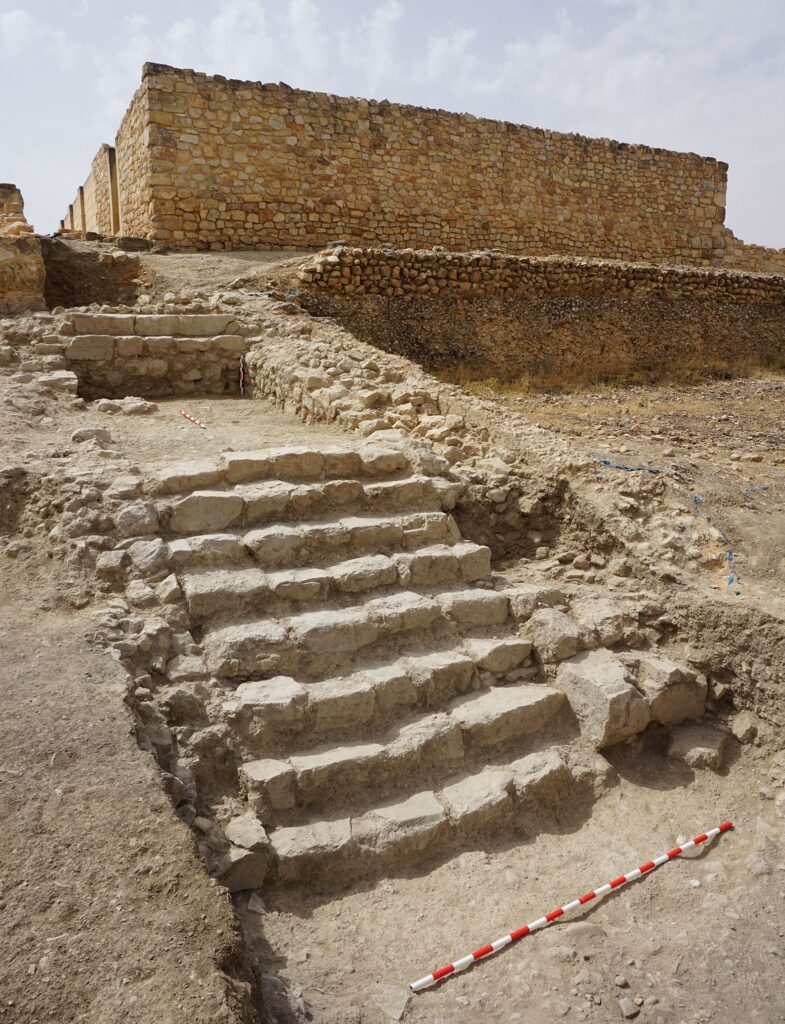
This secondary use makes the discovery particularly revealing. Similar cases of ancient sculpture reused as building material in Spain show how monuments could acquire entirely different functions as cities changed. The Libisosa head preserves evidence not only of Iberian artistic traditions but also of the transformation that followed Rome’s expansion into the region.
The excavation project is directed by archaeologist Héctor Uroz and led by the University of Murcia. Researchers from the universities of Alicante, Valencia, Barcelona, Cádiz and Madrid are also participating in the investigation.
Libisosa was “frozen in time”
Libisosa occupies Cerro del Castillo near the modern town of Lezuza in Albacete Province. Its elevated position overlooked an important network of routes through the southeastern Iberian Peninsula.
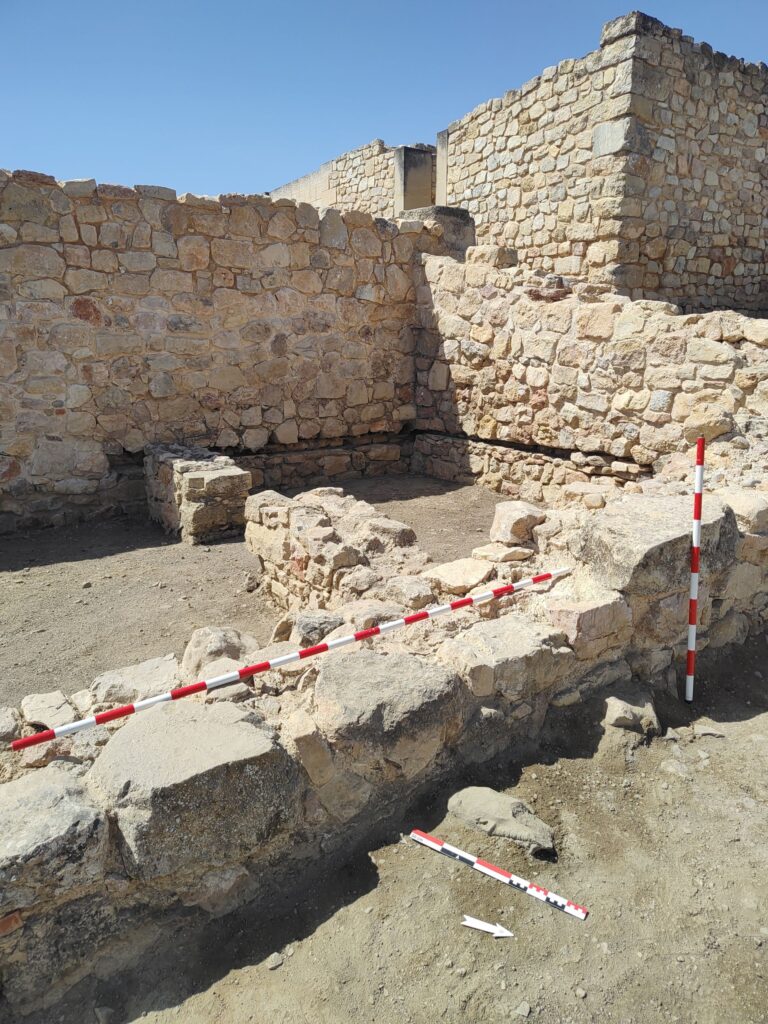
By the fifth century BCE, the site had developed into an Oretanian oppidum, or fortified settlement, with an extensive urban layout. Archaeologists have uncovered domestic buildings, ritual areas and unusually rich collections of objects that offer a detailed view of life before the Roman reorganization of the city.
The settlement suffered a violent destruction during the Sertorian Wars, fought between 82 and 72 BCE. Numerous objects were abandoned inside the buildings, preserving parts of the city much as they had stood at the moment of destruction. This remarkable archaeological record has earned Libisosa the description of a city “frozen in time.”
A Roman colony known as Libisosa Forum Augustana was subsequently established at the site and was later mentioned by Pliny the Elder. Its forum, fortifications and public buildings reshaped the hill, while stones taken from earlier Iberian monuments were incorporated into the new architecture.
Only around 10 percent of Libisosa’s approximately 30-hectare archaeological area has been excavated. The statue head concealed inside the granary wall raises the possibility that other fragments of dismantled Iberian monuments still survive—not in cemeteries or sanctuaries, but hidden within the Roman city that replaced them.
An archaeologist holds the nearly life-size Iberian limestone head discovered at Libisosa in southeastern Spain. The sculpture dates to the fifth or fourth century BCE. Credit: Libisosa Archaeological Project / Government of Castilla-La Mancha