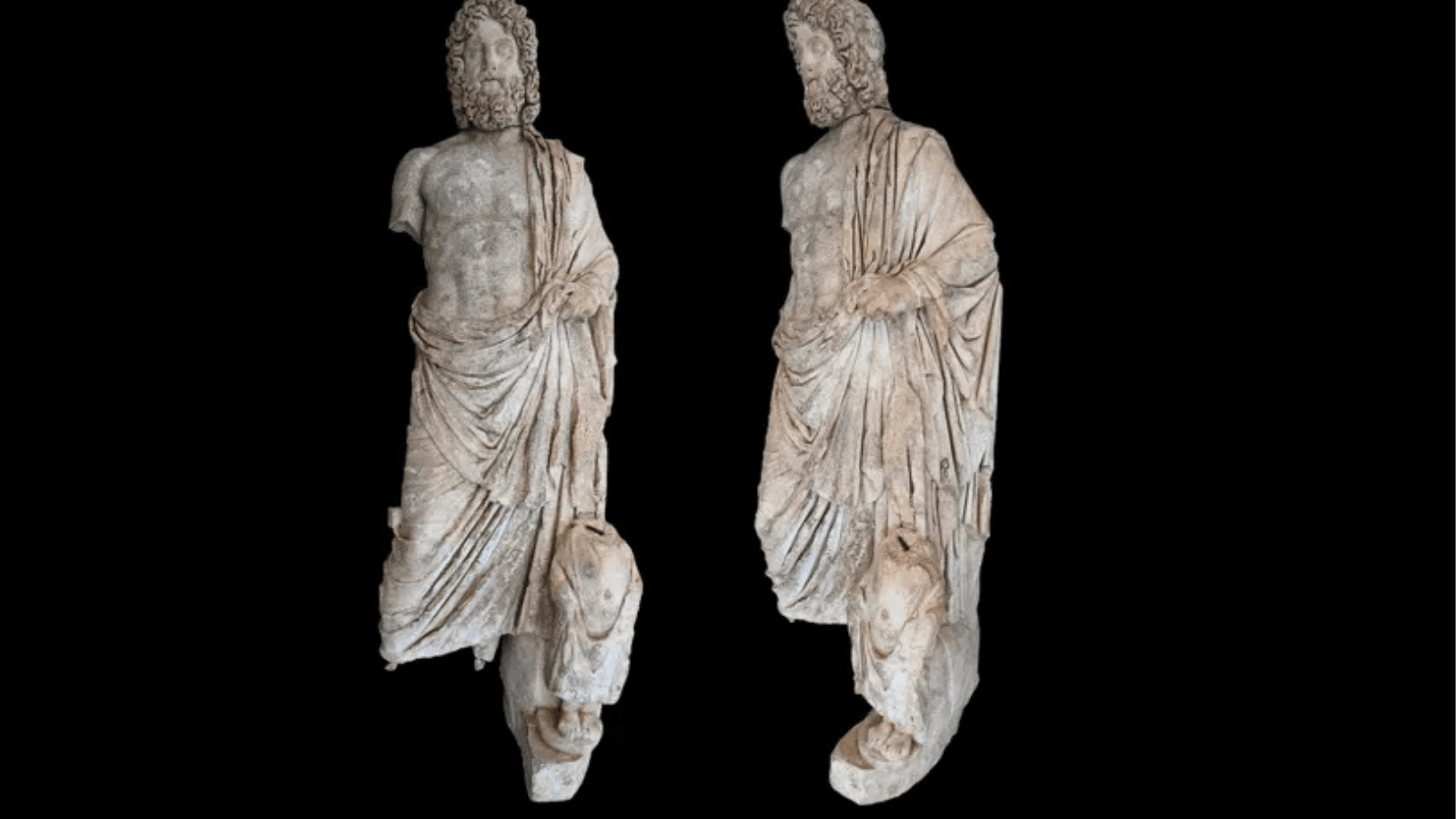
Archaeologists excavating Aspendos in southern Türkiye have uncovered a 2.20-meter-high marble sculpture of Asclepius accompanied by Telesphorus, adding new evidence for the worship of healing deities in the Roman city.
The sculpture group came to light amid fallen stone blocks from the northern section of a monumental gateway beside the East Square, according to Türkiye’s Ministry of Culture and Tourism. The excavations, directed by Assoc. Prof. Mustafa Bilgin of Afyon Kocatepe University, have been underway since 2022 and are continuing as part of the ministry’s Legacy to the Future Project.
The gateway stood along Theatre Street, one of the main routes through Aspendos. Its location placed the sculpture within a prominent part of the city, close to a major square and an entrance used by people moving through the urban center.
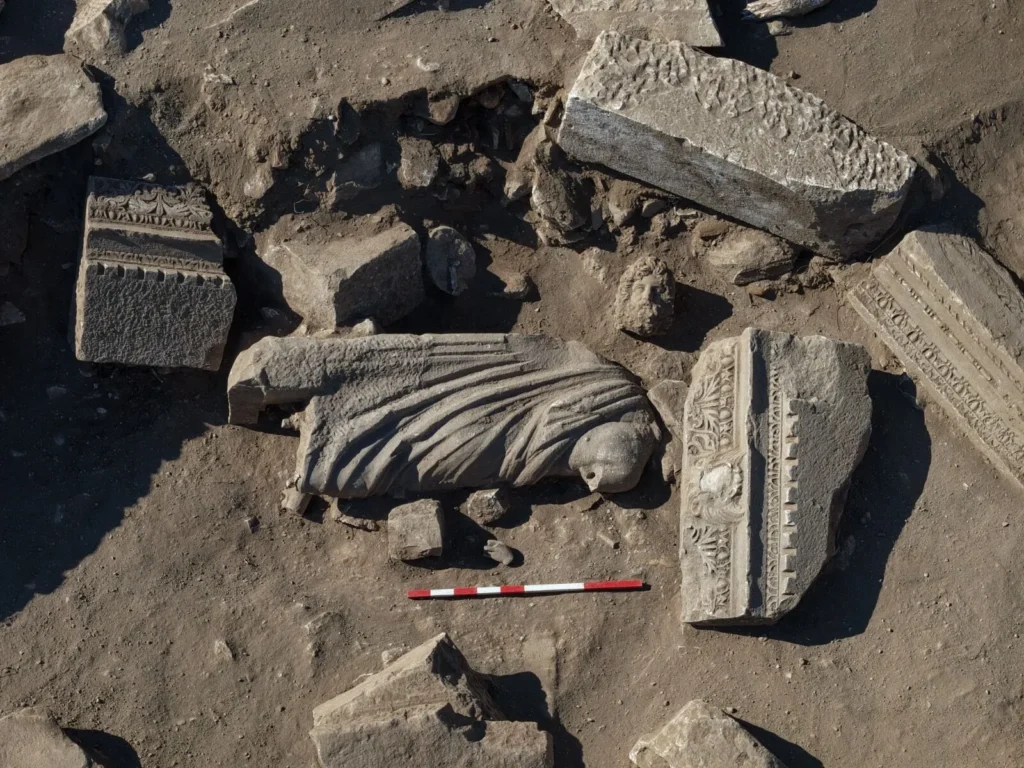
A Gateway Rich in Roman Sculpture
The gateway stood along Theatre Street, one of the main routes through Aspendos. Its location placed the sculpture within a prominent part of the city, close to a major square and an entrance used by people moving through the urban center.
The same area has already produced a notable group of sculptural finds. During earlier excavations, archaeologists recovered a statue of Hermes from the collapsed remains of a monumental fountain on the southern side of the entrance, along with sculptural fragments associated with Aphrodite, Eros, Artemis and Nemesis. The newly discovered Asclepius and Telesphorus group, found in the northern section of the gateway, adds another element to this concentration of Roman sculpture, although its original display position has yet to be established.
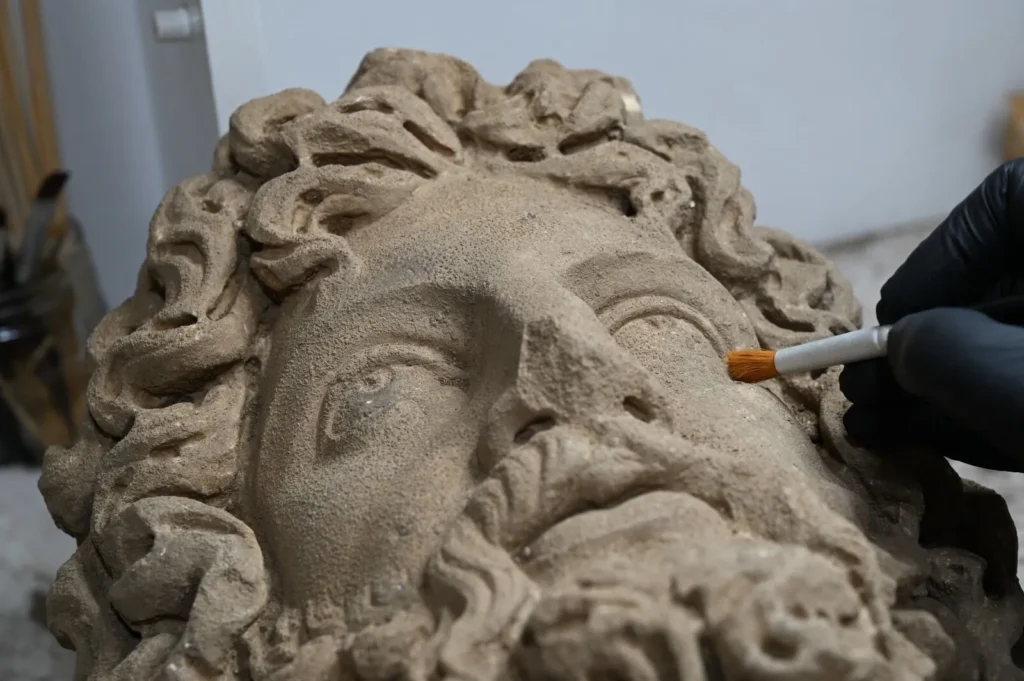
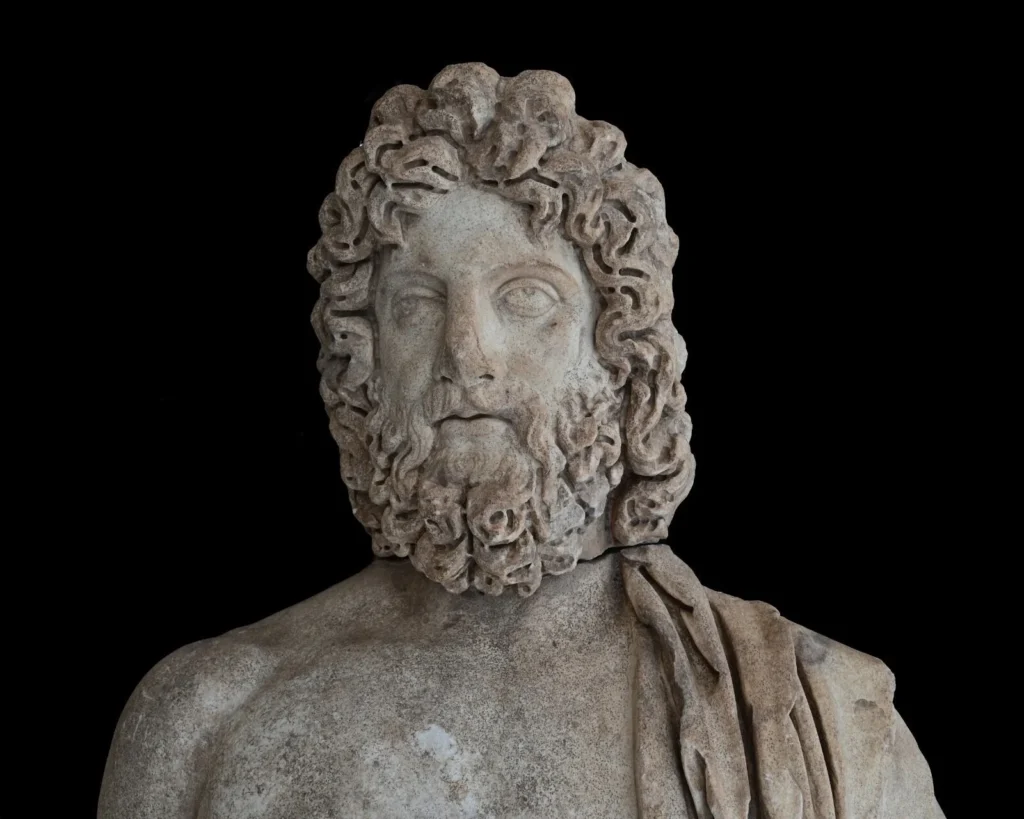
Asclepius, the dominant figure in the group, survives as a mature, bearded man with long, thick hair. He stands with his weight carried on the left leg and the right leg slightly bent.
Much of his torso is uncovered. A himation falls from the left shoulder and continues around the lower body in deeply worked folds.
The carving of the drapery, face, hair and beard points to a date in the final quarter of the second century AD, the ministry said.
The small hooded figure beside Asclepius
At the god’s left foot is Telesphorus, rendered on a far smaller scale.
He is almost entirely hidden inside a long hooded garment, leaving few anatomical details visible. The distinctive clothing is one of the attributes used to identify Telesphorus in ancient imagery.
The two deities belonged to the same sphere of healing but represented different aspects of it.
Asclepius was widely worshipped across the Greek and Roman world as a god connected with medicine and the treatment of illness. Telesphorus was associated more specifically with convalescence and the completion of recovery.
Their appearance together at Aspendos therefore gives the sculpture a clear healing context.
What makes the discovery particularly useful to archaeologists is where it was found. The group was associated with monumental architecture in a heavily used public part of the city, rather than a secluded domestic setting.
That setting provides a physical context for the presence of the Asclepius cult at Aspendos and shows that imagery connected with health and recovery formed part of the city’s public environment during the Roman period.
Beyond Aspendos’ famous theatre
Aspendos is best known today for its exceptionally preserved Roman theatre, but excavations continue to reveal the streets, squares and monumental buildings that surrounded it.
The newly uncovered sculpture adds a religious dimension to that picture.
Together with the other sculptural finds from the gateway area, the discovery suggests that divine imagery may have played an important role in the monumental setting of this part of Aspendos. In this case, the message was closely tied to health: Asclepius represented medical healing, while the small hooded Telesphorus beside him represented recovery.