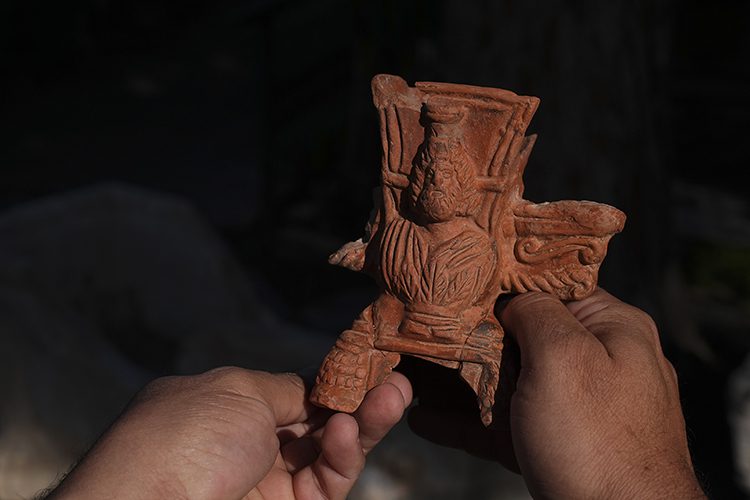
Morning light was spilling across the ruins of ancient Ephesus when archaeologists reached a layer of collapsed masonry inside the vast Harbor Bath. Among scattered marble fragments and broken architectural blocks, a small terracotta object caught their attention—its reddish surface, its sharp contours, and, most strikingly, the unmistakable face of Serapis, the Egyptian god who once traveled across the Mediterranean on the currents of empire and trade.
It was not a statue. It was a 2,000-year-old incense burner, modeled with surprising refinement. And for a moment, the discovery seemed to pull together threads of Egyptian religion, Roman urban life, and Ephesian port culture into a single fragile piece of clay.
An Unexpected Discovery in the Harbor Bath
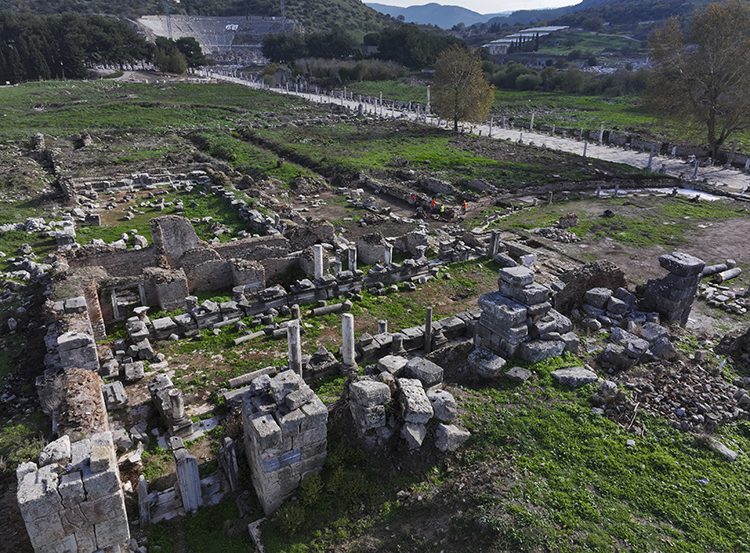
The find emerged during Turkey’s year-round “Endless Ephesus” project, which aims to uncover and safeguard the city’s monumental architecture. Excavation teams have been working through the oval hall, courtyard, latrine, and pool rooms of the Harbor Bath—an expansive Roman complex marking the final approach to the ancient port.
According to project director Prof. Serdar Aybek, the building routinely offers up marble ornamentation, bronzes, and heavy structural fragments. But this small terracotta piece immediately stood apart. It carried personality. Identity. A story not often visible in monumental ruins.
A God on the Move: The Iconography of Serapis
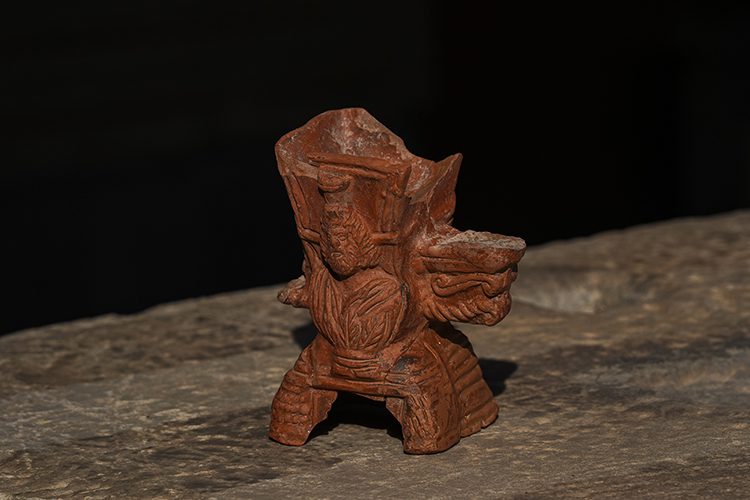
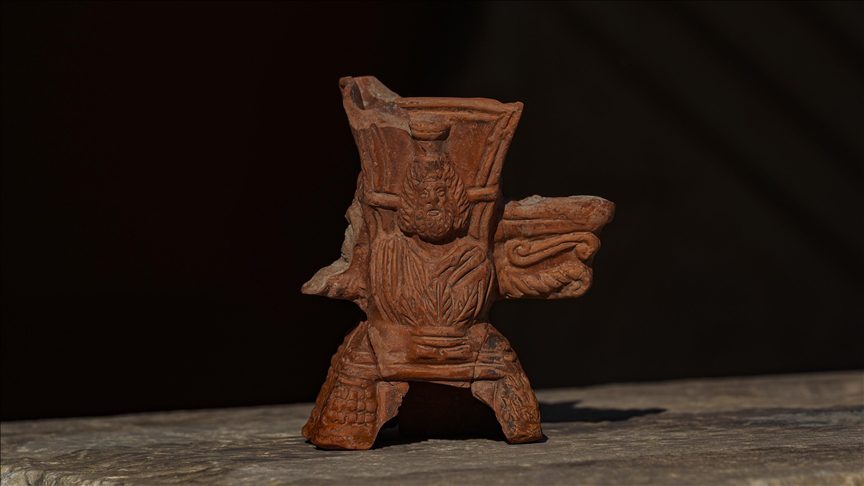
The burner’s front panel reveals a relief echoing the celebrated Serapis statue attributed to the Hellenistic sculptor Bryaxis. The thick curls, the heavy beard, the high modius crown—all hallmarks of a deity crafted to appeal beyond Egypt, reshaped in antiquity to speak to a multicultural audience across the Mediterranean.
But the most intriguing clue sits on the back: a short inscription. This marking allowed the team to match the burner with a similar example previously excavated in the Terrace Houses (Yamaç Evler). Two nearly identical ritual objects appearing in different contexts strongly suggests either a specialized local workshop or a distributive trade system that supplied Ephesus with standardized cult material.
The Egyptian Presence in a Roman Metropolis
Though born in Ptolemaic Egypt, the cult of Serapis spread rapidly under Roman rule. Ephesus became one of its major Anatolian centers; by the 2nd century CE, Egyptian merchants had financed the construction of a monumental Serapis Temple. Graffiti, inscriptions, and scattered votive objects throughout the city attest to a vibrant community shaped by seafaring trade and religious plurality.
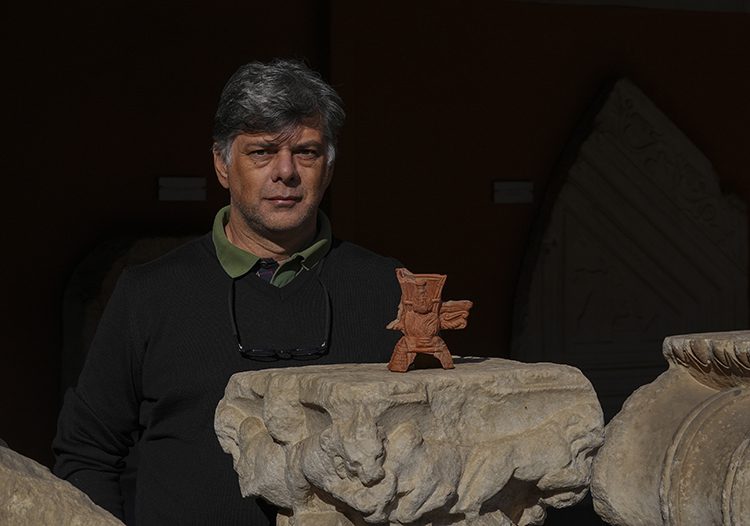
This incense burner adds a new dimension to that picture. It belongs not to the realm of grand ceremonies but to daily rituals—moments of devotion, purification, or prayer unfolding in private or semi-private spaces. It reminds us that ancient religious life was not only monumental, but personal.
From Excavation to Museum: The Journey Continues
For Prof. Aybek, the reappearance of similar artifacts across different seasons is no coincidence. It signals a city deeply engaged in production, trade, and cultural interchange—one that absorbed influences from Egypt, the Aegean, and beyond.
Once conservation is complete, the incense burner will join the Ephesus Museum collection, where it will help reshape modern understanding of ritual life in one of antiquity’s most international cities.