
A piece of bread lay at the threshold of a building for nearly 5,000 years—charred, buried, and deliberately preserved. Now uncovered at Küllüoba Höyük in western Anatolia, it offers a rare and direct insight into how early societies combined food, technology, and belief.
A Loaf That Was Never Meant to Be Eaten
This was not ordinary food waste.
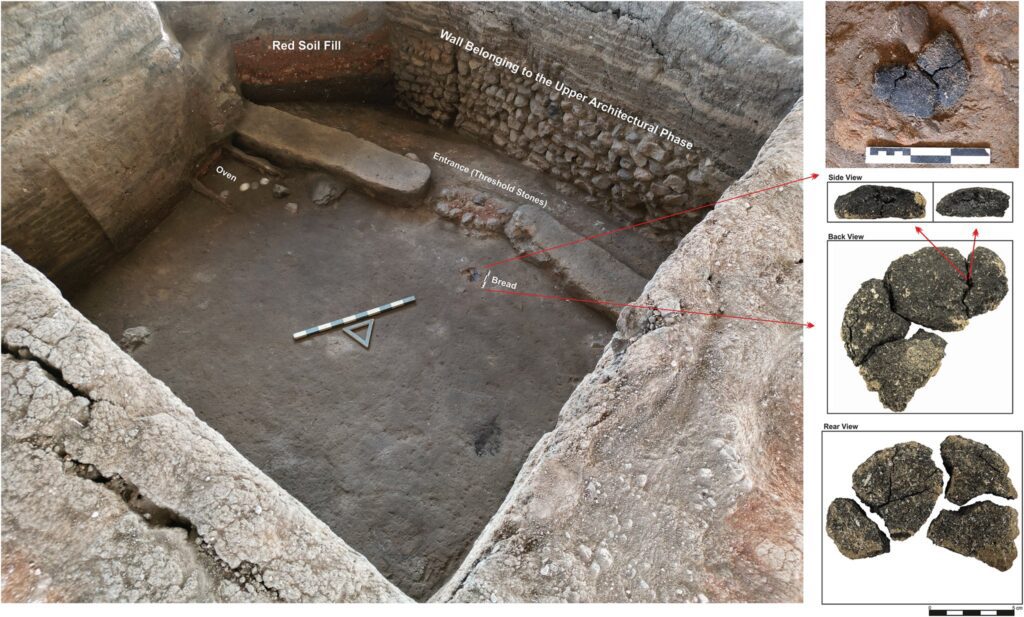
The bread was intentionally burned and carefully sealed beneath a thick layer of soil. Its position—right beside a doorway—immediately signals meaning. In prehistoric Anatolia, thresholds were not just architectural elements; they were symbolic boundaries.
The evidence points clearly to a ritual act linked to the abandonment of the building.
A Surprisingly Advanced Ancient Recipe
Despite its simple appearance, the loaf reveals a sophisticated preparation process.
Scientific analysis shows it was made primarily from emmer wheat, with small amounts of lentils mixed in. The flour was coarse and unsieved, and microscopic air pockets inside the bread indicate that the dough was kneaded and possibly fermented.
This is a crucial detail.
Earlier prehistoric breads are typically flat and dense. Here, we are likely looking at an early form of controlled dough preparation—possibly even leavening.
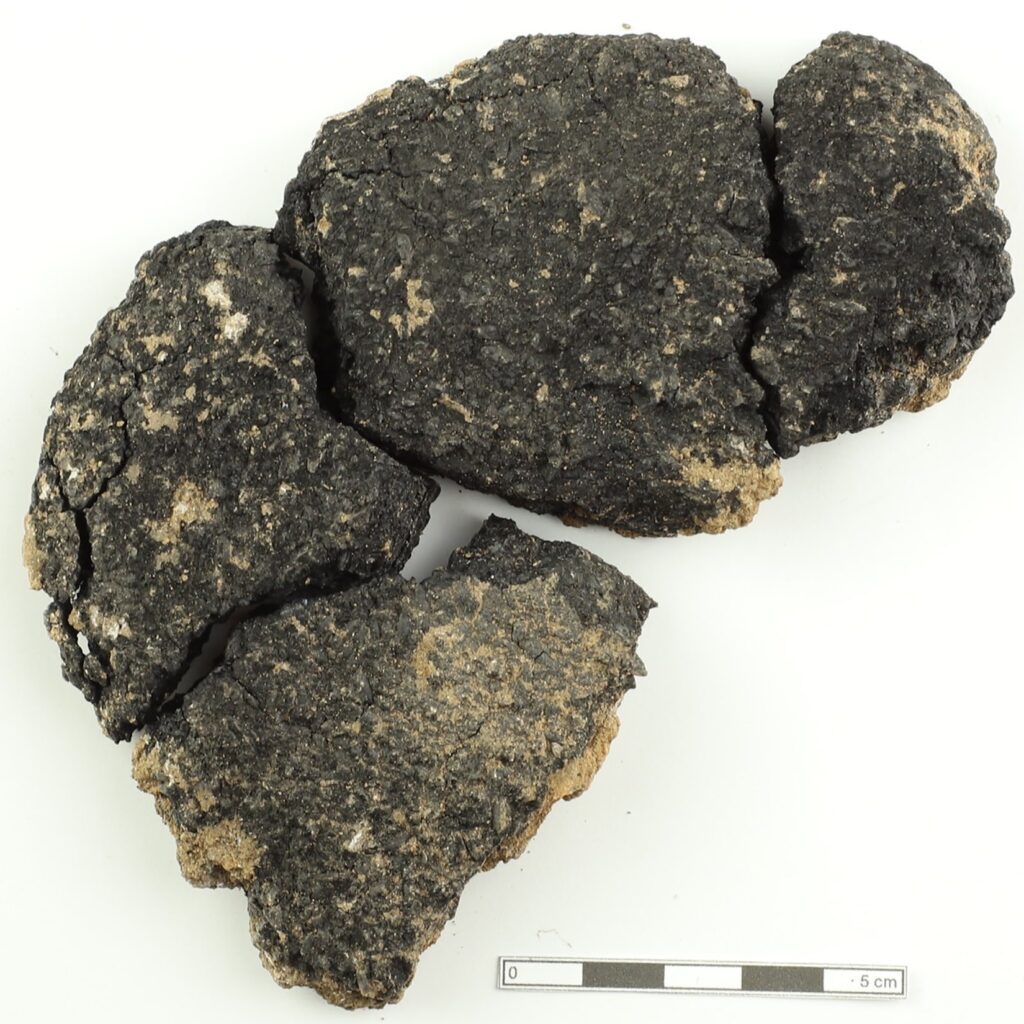
Photo: Küllüoba excavation team
Nutrition Was Already a Consideration
The addition of lentils is not random.
It reflects a deliberate choice to improve nutritional value. By combining cereals with legumes, the makers created a more balanced food—richer in protein and more sustaining.
This suggests that Early Bronze Age communities were not simply producing food, but understanding it.
Chemical analyses confirm the presence of carbohydrates, proteins, and plant residues, preserving the original composition in remarkable detail. Even fragments of grain stalks were detected, showing minimal processing.
More Than Food: A Symbolic Act
What makes this discovery exceptional is not just the recipe—it is the intention.
The bread’s placement, its controlled burning, and its burial all indicate that it was part of a symbolic practice rather than daily consumption.
Similar traditions are known from earlier Anatolian sites, where buildings were ritually sealed. In this case, the bread appears to have functioned as an offering, possibly marking the end of a structure’s use.
Food, here, becomes a cultural and ritual object.
A Window Into an Organized Society
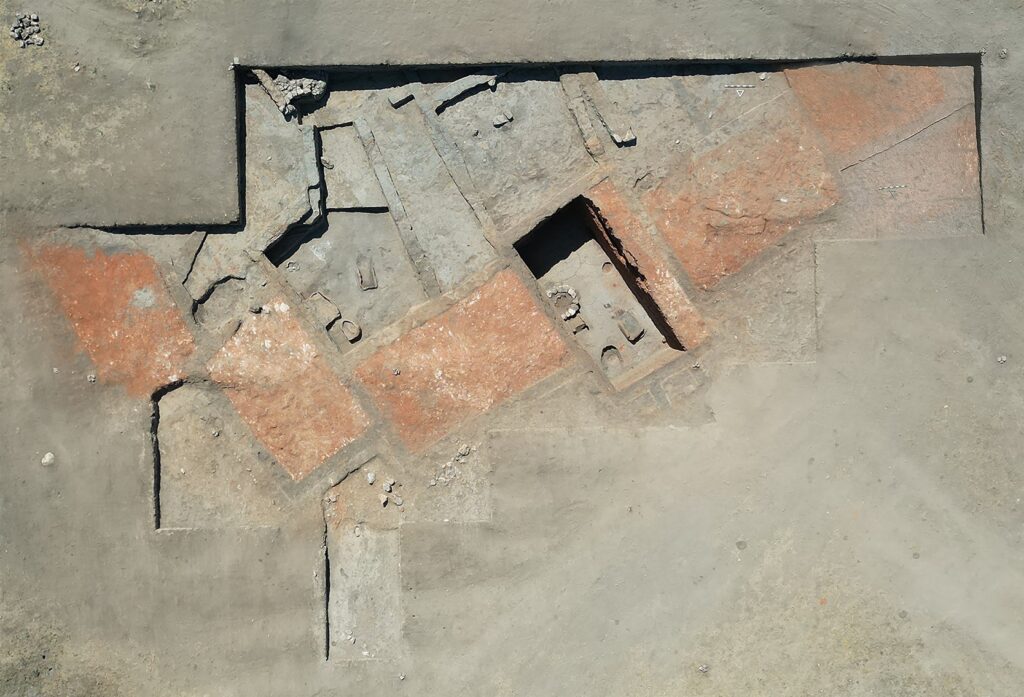
Küllüoba was not a small or short-lived settlement. It shows signs of planned architecture, repeated rebuilding, and specialized activity areas.
The building where the bread was found contained multiple ovens, suggesting intensive food production. Archaeobotanical data confirms a diverse plant economy dominated by emmer wheat, with smaller amounts of legumes.
Interestingly, barley—although present at the site—was not used in this bread. This points to intentional ingredient selection rather than necessity.
Why This Discovery Stands Out
This bread represents a clear shift.
Compared to earlier examples from the Near East, it belongs to a fully agricultural society where food production had already become technical, selective, and meaningful.
It shows:
– deliberate recipes
– early dough processing techniques
– and a strong ritual dimension
Few discoveries bring all three together this clearly.
A Human Moment, Preserved
Someone prepared this bread with care.
Someone placed it deliberately at a doorway.
And then it was left behind—not as waste, but as part of a meaningful act.
What survives today is not just a 5,000-year-old loaf.
It is a trace of intention, preserved across millennia.
Kavak S, Tuna Y, Eker YR, Akyol Ş, Özcan AC, Türkteki M. (2026). Archaeometric analysis of Early Bronze Age bread from Küllüoba Höyük. PLOS ONE, 21(3): e0344705.
https://doi.org/10.1371/journal.pone.0344705