
Archaeological research in Basel has produced an unexpected finding that is reshaping assumptions about daily life on the northern frontier of the Roman Empire. Beneath the modern city, researchers have identified the remains of a hybrid camel dating to the fourth century CE, offering rare and concrete evidence that camels were not confined to desert provinces but were actively integrated into Roman logistics in Central Europe.
The discovery, documented in the 2024 annual report of Basel’s Archaeological Research Office, confirms that at least one camel—bred by crossing a single-humped dromedary with a two-humped Bactrian camel—once lived and worked along the Rhine. This is the westernmost confirmed evidence of a hybrid camel in Roman Europe, and it carries significant implications for how the empire managed transport, supply chains, and environmental adaptation.
A Bone That Changed the Narrative
The breakthrough came from a fragmented camel mandible uncovered near Basel’s Spiegelhof area. Initially indistinguishable from countless animal remains found on Roman sites, the jawbone revealed its true importance only after detailed zooarchaeological and isotopic analysis. Dental morphology confirmed the animal as a hybrid camel, a type deliberately bred in antiquity for its exceptional strength, endurance, and adaptability.
Isotope data added a crucial layer of context. The camel did not originate in Europe and had relocated between distinct regions at least twice during its lifetime. This strongly suggests long-distance movement—most plausibly from North Africa or the Arabian Peninsula—before the animal reached the Rhine frontier. In other words, this was not an exotic curiosity but part of a functioning imperial system of mobility.

Why Hybrid Camels Mattered to Rome
Hybrid camels were prized because they combined the stamina of Bactrian camels with the speed and flexibility of dromedaries. For Roman planners, this was a strategic solution, particularly in frontier zones where cold, wet conditions and muddy terrain challenged conventional pack animals. Unlike pure desert camels, hybrids could tolerate European climates, making them suitable for supply routes connecting forts, depots, and construction sites.
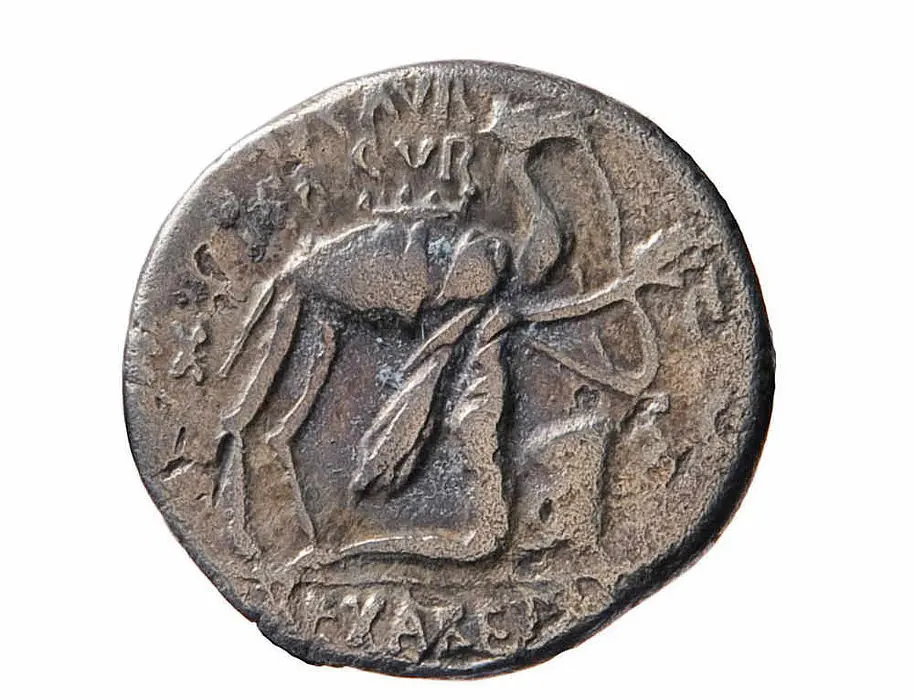
Roman literary sources already attest to camel use in military contexts, including specialized camel-mounted units known as Dromedarii. The Basel remains now provide archaeological confirmation that such practices extended far into the empire’s northwestern provinces.
Roads, Legions, and the Rhine Frontier
The camel bones were recovered along the line of a Roman road linking Basel’s Münsterhügel with wider imperial transport networks. This same corridor connected to Augusta Raurica, where camel remains have also been identified. Archaeologists consider it likely that Legio Prima Martia, active in construction and defense projects in the region, played a role in bringing these animals north.
The dating of the remains aligns with a period of intense military consolidation along the Rhine, when the future emperor Valentinian I commanded forces in the area. During his campaigns, fortifications were reinforced and supply systems expanded—conditions under which robust transport animals would have been indispensable.
Not Exotic, but Essential
One of the most important conclusions of the study is interpretive rather than descriptive. The Basel camels were working animals, embedded in everyday military and logistical operations. They likely carried food, equipment, and building materials vital to frontier defense. Their presence underscores how deeply interconnected the Roman world was, even at its geographic margins.
Crucially, Rome did not usually breed camels locally. Animals were purchased from professional breeders and traders in Africa and Southwest Asia, meaning the Basel camel was part of a continent-spanning economic network. The empire’s ability to source, transport, and deploy such animals reflects a level of logistical sophistication rarely associated with ancient Europe.
Rethinking Roman Mobility in Europe
From an archaeological perspective, the Basel discovery challenges long-standing assumptions that camels were confined to arid provinces. Instead, it demonstrates Roman adaptability—the deliberate selection of hybrid animals suited to unfamiliar environments. This insight adds depth to current debates on mobility, infrastructure, and resource management in late Roman Europe.
For Basel itself, the find reinforces the city’s historical role as a crossroads shaped by trade, military strategy, and long-distance connections. It also invites a striking reimagining of the past: Roman soldiers guiding sturdy camels along Rhine-side roads that still structure the city’s urban landscape today.
Ongoing research may yet clarify how many camels reached Roman Switzerland and how extensively they were used. What is already clear, however, is remarkable. Camels once lived and worked in Roman Basel, and their story is forcing historians to rethink the realities of life on Europe’s northern frontier.
Archaeological Research Office of Basel-Stadt
Cover Image credit: The jawbone of a hybrid camel that came to rest beneath today’s Spiegelhof around 1,700 years ago. The lighter bone fragments were discovered in 1939, while the darker ones were only found in 2018. Archaeology Basel-Stadt; P. Saurbeck.